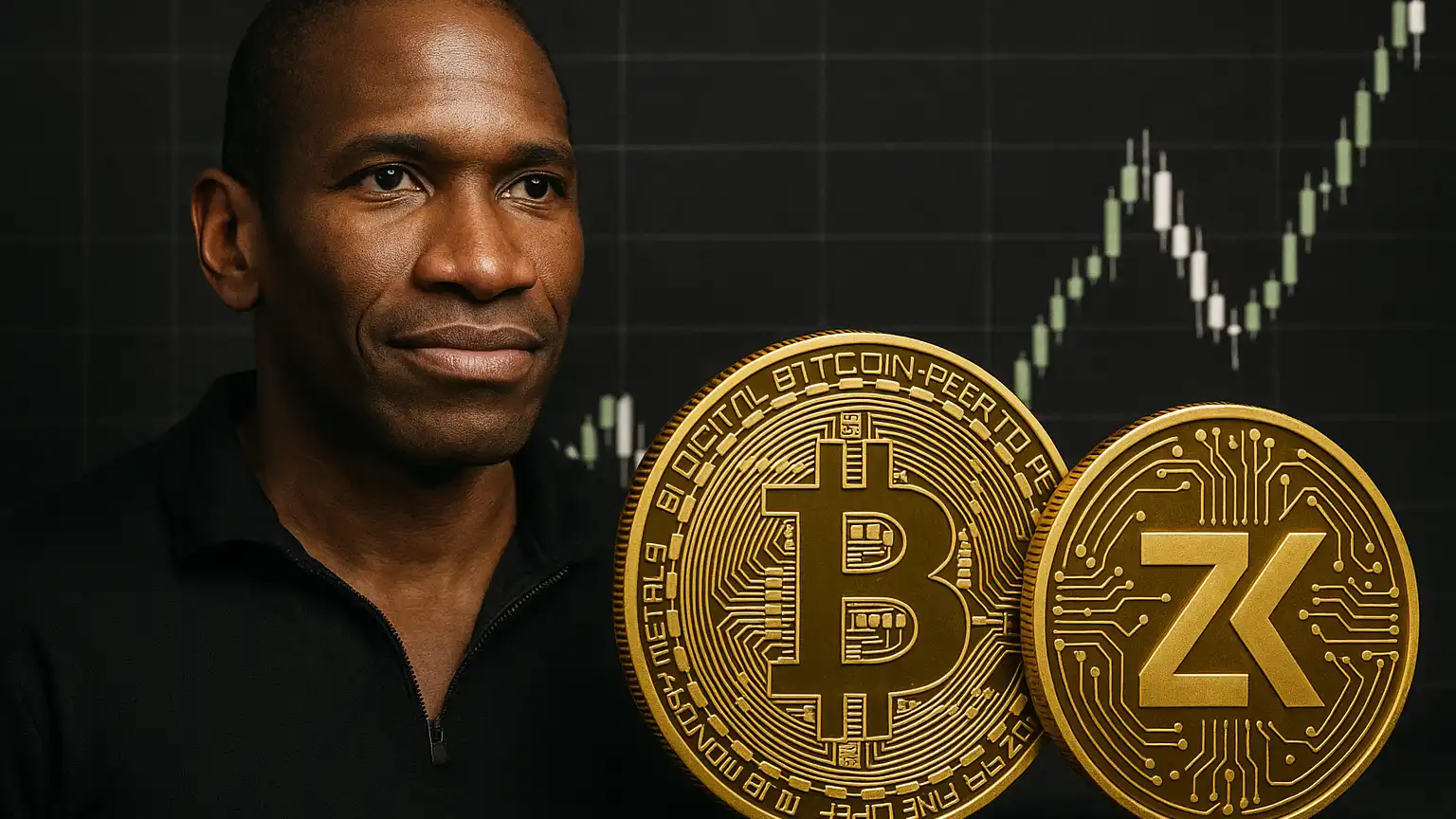
The cryptocurrency market is reeling from sharp drops across major tokens. Bitcoin, once comfortably above $90,000, has tumbled to $85,758 this week—a 6% slip—while Ethereum trades at $2,810 amid a broader altcoin retreat. But behind this sell-off, whispers of the next narrative wave are gaining traction. Former BitMEX CEO Arthur Hayes, one of crypto’s most forward-looking voices, believes the 2026 market cycle will be shaped not by artificial intelligence or stablecoins, but by privacy—specifically, zero-knowledge (ZK) cryptography and privacy-first blockchains.
Privacy as the Post-AI Narrative
In a recent video discussion, Hayes framed crypto adoption cycles as narrative-driven epochs. “Each year has a theme,” he said—and 2026, in his view, will mark the return of privacy as a central pillar of savvy investor attention. While 2025 has been dominated by AI-related tokens and stablecoin innovations, Hayes sees a wave of demand building behind truly private crypto systems as regulators exert mounting pressure on transparency and compliance.
Zcash, a longstanding yet often overlooked privacy token, was name-checked by Hayes as a likely winner. “It could be the comeback story of the cycle,” he noted, pointing to increasing friction between on-chain visibility and personal financial sovereignty. Monero, another privacy veteran, may also regain relevance as users seek alternatives to surveillance-heavy networks. The increased institutional involvement in crypto—ironically, the same force pushing for regulation—might paradoxically drive even more users toward privacy coins, especially in authoritarian regimes or turbulent economies where financial discretion is survival.
Zero-Knowledge Proofs Set for Breakout
More than privacy coins alone, Hayes suggests it is the core technology of zero-knowledge proofs that will define the next wave of innovation. Unlike traditional privacy models, ZK aims to let users prove facts without revealing underlying data—a potential revolution not just for privacy, but for blockchain scalability, compliance frameworks, and decentralized identity.
ZK rollups, ZK bridges, and new privacy protocols stand at the edge of broader adoption. Hayes admits he doesn’t yet know which project represents the “Ethena of 2026,” referring to a portfolio gem that delivered outsized returns for his firm in earlier cycles. But he is betting the standout winner will be born from the ZK sector, the same way protocols like Optimism or Arbitrum emerged from earlier scalability narratives.
Maelstrom Doubles Down on the ZK Thesis
Hayes is not merely making predictions from the sidelines. His investment fund, Maelstrom, has begun refocusing its research apparatus and capital allocation strategy to hunt for early-stage ZK-based projects. He cited the firm’s success in capitalizing on AI and synthetic dollar tokens earlier in the decade, and now hopes to replicate that outcome in the highly technical, often misunderstood world of cryptographic proofs.
He likened the structure of Maelstrom’s next positions to venture-style bets: high conviction, long horizon, and built on protocol-level infrastructure, not just token speculation. “We want to back the equivalent of an early zkSync, Scroll, or Aleo, but with even more emphasis on real cryptographic innovation,” Hayes mentioned.
Challenges on the Road to ZK Adoption
Despite Hayes’ bullishness, the road to mass adoption for ZK-based solutions is fraught with obstacles. Many ZK protocols remain in early development stages, and scalability often comes at the cost of decentralization or user-friendliness. Moreover, integrating ZK features into existing chains or dApps requires technical overhauls that few teams are willing to pursue without clear ROI.
Privacy, too, may clash with legal frameworks. Regulators worldwide are increasingly expecting blockchain transparency, especially for AML (Anti-Money Laundering) compliance. ZK-based chains must navigate delicate balancing acts: providing viable anonymity while still integrating optional compliance layers that do not alienate their core user base.
Conclusion: A Quiet Revolution Looms
While token prices fluctuate and mainstream headlines focus on ETFs and memecoin hype, a more technical—and perhaps transformative—shift may be underway. If privacy is this cycle’s forgotten value, then zero-knowledge proof systems may soon become its most crucial infrastructure. Arthur Hayes isn’t just predicting narratives; he’s placing capital-weighted bets on what he calls the “inevitability of encrypted finance.”
As the crypto market braces for what 2026 may bring, industry investors would be wise not just to watch prices—but to understand protocols. In the quiet corners of GitHub repositories and ZK whitepapers may lie the next multi-billion-dollar project. Hayes’ call is not merely speculative—it’s strategic. And increasingly, it’s resonating.