
Recent Developments and Market Context
PYTHIA has been hovering around $0.0491 USDT this past week, with a small bump of roughly +1.25% over the last 24 hours. While that uptick sounds encouraging, it’s worth noting the token is still sitting about 9–10% under its recent multi-month high and considerably off from its all-time peak near $0.1267 back in August 2025. Trading volume has been pretty quiet lately, which tends to happen when a project enters consolidation mode after an earlier rally. With circulating supply close to maxing out at around 998 million PYTHIA, there’s minimal inflation risk—but that also means any significant price jump would need a real surge in demand. The buzz around decentralized science (DeSci), AI and biotech partnerships, and community perks like airdrops seems to be helping sentiment, though these haven’t really translated into strong technical momentum yet.
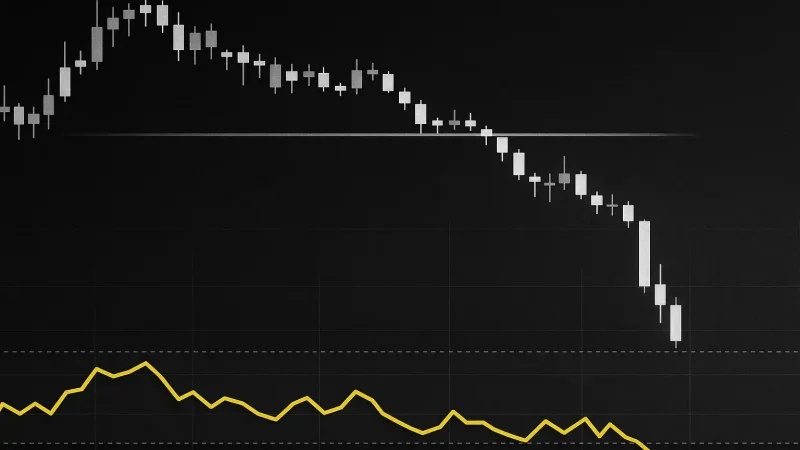
From a technical standpoint, the picture is somewhat mixed. Support appears to be forming around $0.04683, $0.04494, and $0.04257, while resistance is hanging out near $0.05109, $0.05347, and $0.05535. Some analysis platforms are labeling PYTHIA as a “Strong Sell” right now, mainly because the price is trading below its major moving averages—both the 50-day and 200-day EMAs—and volatility remains elevated with roughly 8.6% ATR compared to the current price. Put together, these signs suggest PYTHIA is stuck in consolidation with a bearish lean until we see either a clear breakout on higher timeframes or some major catalyst to shake things up.
Indicator-Driven Levels and Price Projection
Looking at the daily chart, the Relative Strength Index (RSI) is sitting around 47—right in neutral territory. It’s neither overbought nor oversold, which means the door is open for movement in either direction. Volume hasn’t been dramatic, staying in the low-to-average range, and price continues to trade beneath both the 50- and 200-day EMAs. Generally, that signals longer-term bearish pressure unless we start seeing some clear reversal patterns. Bollinger Bands show PYTHIA trading within the middle range—not squeezed tight, but also without the kind of compression that often precedes a breakout. The immediate resistance to watch is just above $0.051, with stronger caps around $0.055. On the downside, support looks somewhat fragile between $0.0465 and $0.0445, with a more solid floor appearing near $0.0425 if sellers really start pushing.
Short-Term Scenario (Next 1-2 Weeks)
If PYTHIA can stay above the $0.0465–$0.0470 range and we see volume pick up, there’s a decent chance we could see a test of resistance around $0.051–$0.0535. Breaking through $0.051 with conviction might generate enough momentum to push toward $0.0553, though that would definitely require sustained buying interest. On the flip side, if support at $0.0465 gives way, we could see a slide toward $0.0449, and possibly down to $0.0426 where stronger support levels appear to be waiting. For short-term traders, keeping an eye on RSI divergence, MACD crossover signals, and how price behaves around the 20- and 50-period moving averages should give some clues about potential trend shifts.
Mid-Term Outlook and Risk Considerations
Over the next one to three months, PYTHIA faces the uphill task of rebuilding confidence after some pretty steep losses—we’re talking roughly 60% down from its all-time high. Unless the narrative around DeSci infrastructure, biotech research utility, or institutional adoption really kicks back into gear, the technical picture suggests we’re more likely to see sideways movement or a mild bearish drift. If broader crypto market conditions improve—think positive sentiment, regulatory clarity, that sort of thing—PYTHIA could potentially break above $0.055 and target $0.060 or higher as a mid-term goal. But without those supportive factors, there’s downside risk lurking around the $0.040–$0.0425 zone.
Investors should keep tabs on a few key factors: First, watch for on-chain volume spikes or new exchange listings that could boost liquidity. Second, pay attention to narrative developments like successful biotech trials, protocol launches, or clear proof of real-world utility. Third, don’t ignore macro conditions in the crypto markets—interest rates, regulatory actions affecting DeSci or AI tokens, and general market sentiment all matter. Given the volatility here, anyone looking to take a position should size appropriately and be prepared for the possibility of sharp swings in either direction.