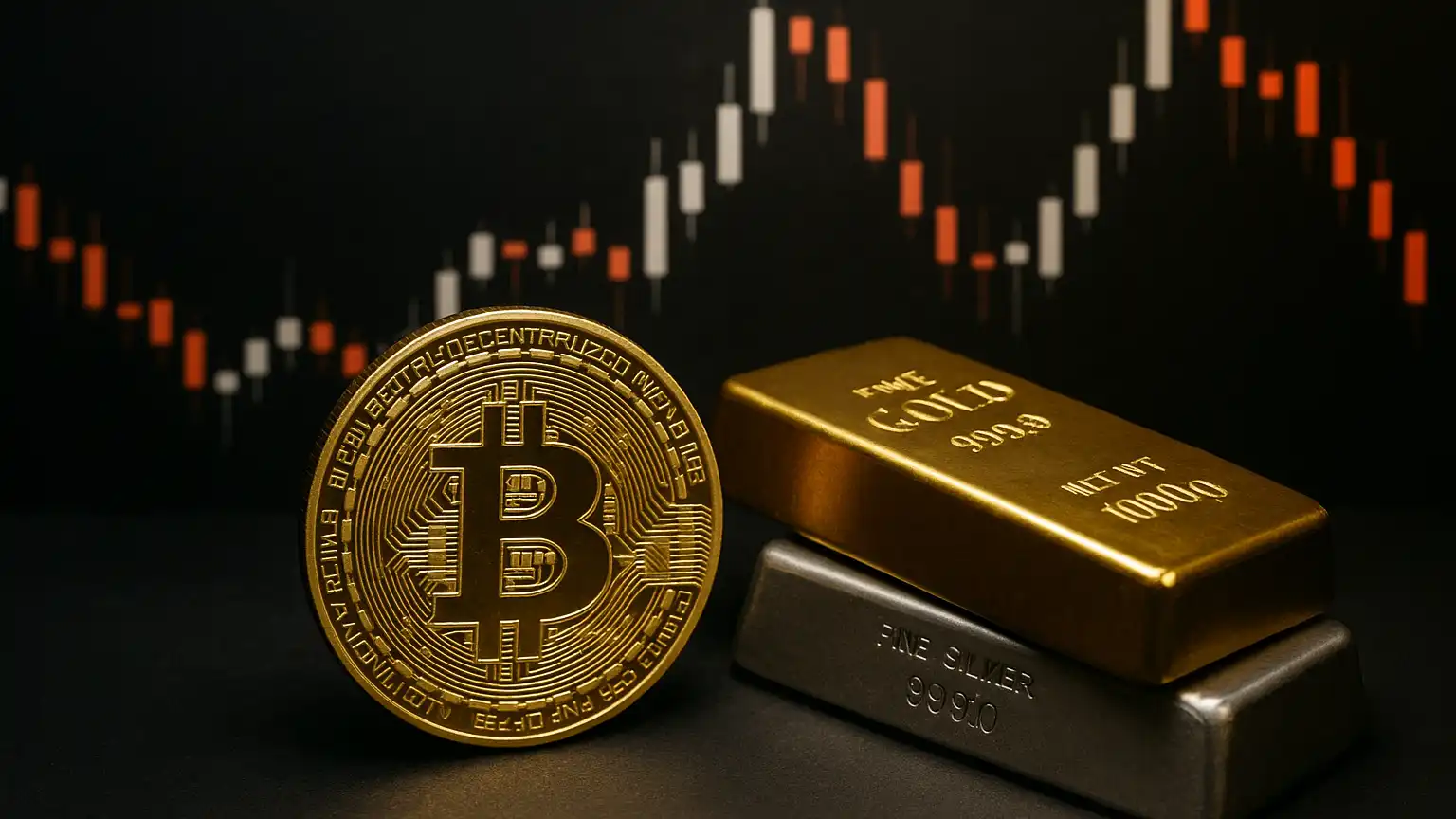
In a week marked by remarkable shifts across financial markets, traditional safe-haven assets like gold and silver surged to unprecedented highs while Bitcoin slid back under the $91,000 mark. The divergence spotlights a growing uncertainty in risk appetites, with political conflict weakening the U.S. dollar and prompting investors to seek refuge in time-tested stores of value. Despite a significant institutional Bitcoin acquisition, the cryptocurrency failed to rally—raising critical questions about its evolving role in global finance.
Safe-Haven Surge as Fed Faces Political Heat
Gold and silver leapt to new all-time highs on the back of weakening confidence in U.S. Federal Reserve independence. Tensions escalated after public friction between Federal Reserve Chair Jerome Powell and former president Donald Trump, fanning fears of possible political interference in monetary policy. With central bank credibility in question and inflation concerns simmering, investors flooded into metals with gold nearing $4,600 per ounce and silver surpassing $84—both never-before-seen levels.
This shift exemplifies investor preference for tangible, apolitical assets when future monetary direction appears unstable. The decades-old reputation of metals as safety plays is being reconfirmed, as market participants signal a vote of no-confidence in both fiat stability and risk-driven assets.
Bitcoin’s Decline Despite Massive Accumulation
In stark contrast to the metals rally, Bitcoin failed to hold early week gains. After briefly topping $92,000, it slid back beneath $91,000 and flirted with the $90,000 line—an unwelcome move for bulls hoping for breakout momentum. This pullback came despite a major strategic buy from Michael Saylor’s firm, Strategy, which added a staggering $1.25 billion worth of Bitcoin to its already massive holdings.
With its total stash now exceeding 687,000 BTC—valued at over $51 billion—Strategy’s average purchase price sits just above $75,000 per coin. Yet traders were largely unmoved by the acquisition announcement, signaling a potential saturation point for bullish news. The lack of upward price movement, even in response to institutional optimism, reinforces fears that macroeconomic headwinds are dictating asset flows more than headlines or sentiment.
Crypto Correlation With Risk Assets Remains Strong
Far from acting as a safe haven alongside gold or silver, Bitcoin continues to mirror the fate of high-growth risk assets like tech stocks. The Nasdaq 100 futures, represented by the QQQ ETF, fell by nearly 1% in pre-market action—coinciding with Bitcoin’s drag lower. For analysts, this reinforces the view that the leading cryptocurrency has yet to decouple from broader equity markets despite being lauded as “digital gold” over the past few years.
Analysts Warn of Substance Behind Market Divergence
According to Dutch crypto analyst Michael van de Poppe, this inflection point is especially significant. While gold and silver have displayed strong momentum, he argued that such breakouts must be sustained or risk fading rapidly. The strength in metal markets has not yet spilled over into crypto, prompting van de Poppe to suggest this is a “critical moment” for Bitcoin to assert strength rather than mimic tech-led drawdowns.
The divergence may also reflect a maturing investor worldview: one that differentiates between speculative digital assets and assets with millennia of credibility during geopolitical crises. Bitcoin’s theoretical safety thesis is being challenged by the real-world preference for what has historically worked.
What It Means for Bitcoin Going Forward
The contrasting trajectories of Bitcoin and precious metals underscore a foundational identity crisis for cryptocurrency in 2025. Is Bitcoin still viewed as a hedge against inflation and monetary instability, or has it become another levered play on tech and future speculation? If metals continue to climb while Bitcoin drifts sideways—or worse, retreats—portfolio managers may begin rethinking crypto’s unique value proposition in turbulent macro environments.
With political influence over economic levers likely to intensify heading into 2026 election cycles, assets that exhibit perceived independence from human error or interference are gaining favor. For Bitcoin to reclaim its place as a non-sovereign store of value, it must weather volatility without simply tracking risk markets—a challenge that could ultimately define its role in the portfolios of tomorrow.