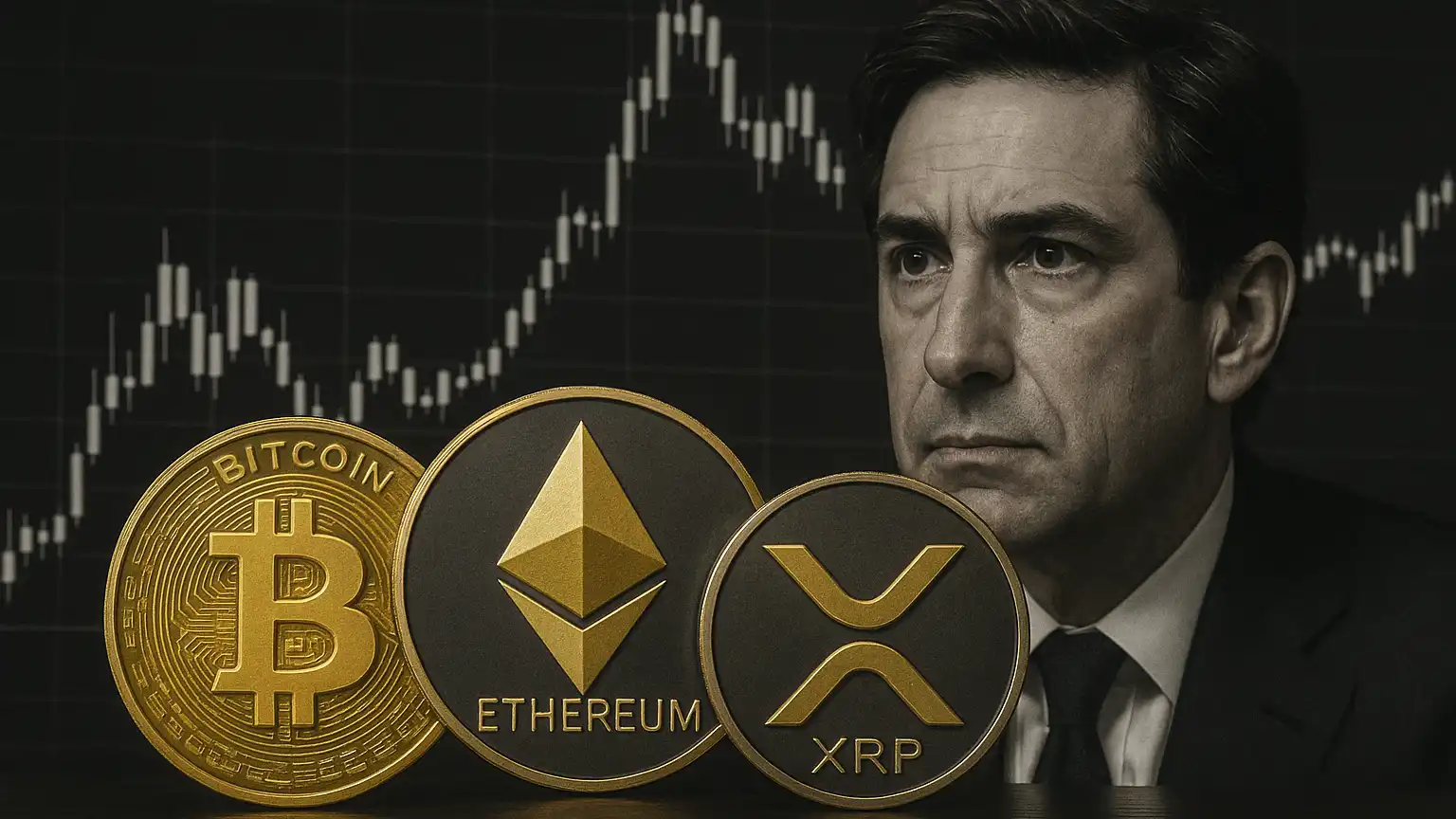
In a move reverberating through both traditional and digital asset markets, former president Donald Trump has formally nominated Kevin Warsh to serve as Chair of the Federal Reserve. The announcement, while still early in its policy implications, has already stirred expectations of a shifting monetary stance, particularly among crypto investors betting on dovishness. For major cryptocurrencies like Bitcoin, Ethereum, and XRP, Warsh’s nomination comes at a time of heightened sensitivity, as the market seeks clarity on inflation, interest rates, and the role of digital assets in a regulated financial system.
The Warsh Factor: Why Crypto Is Watching Closely
Kevin Warsh, a former Fed governor and a known skeptic of prolonged quantitative easing, has traditionally urged for a more rules-based and transparent Fed. While not openly anti-crypto, his cautious approach to monetary expansion contrasts sharply with the dovish playbook of recent years that helped fuel crypto’s meteoric rise. Investors are interpreting Trump’s nomination as a potential inflection point, especially given the timing—crypto markets are already consolidating after their latest euphoric phase.
Bitcoin briefly surged above $110,000 before forming what now appears to be a distribution top. Since then, BTC has lost momentum, sliding back under $70,000—a psychological level that previously served as dynamic support. Ethereum and XRP have followed suit, entering narrow trading corridors marked by thinning volumes and fading volatility. What was once a bull cycle driven by exuberant monetary policy now edges toward a possible macro-induced recalibration, where even the slightest shift in Fed posture could define the direction of the next major move.
Market Behavior Suggests Accumulation or Breakdown
Current weekly charts paint a murky picture. Bitcoin has re-entered the $50,000–$70,000 range, oscillating around a mid-pivot level of $59,600. While some bulls argue the asset is undergoing healthy re-accumulation before a second leg up, the structure more closely resembles a redistribution phase where previous support becomes resistance. The rejection from the $110K–$120K zone formed a textbook topping pattern marked by falling volume and steadily lower highs—traits historically consistent with cooling investor appetite and risk-off sentiment.
Technical indicators confirm a pullback in momentum: RSI on the weekly timeframe has slipped into the low 40s, indicating waning strength, while CMF remains in negative territory—evidence that capital is flowing out of the market. This aligns with on-chain data showing long-term holders beginning to distribute into minor rallies, potentially bracing for deeper corrections aligned with macro events like Warsh’s confirmation hearings.
Can BTC Break $70,000 Again?
For Bitcoin to regain upside traction, the market needs more than a nominal rally. A decisive weekly close above $72,000, backed by expanding volume and positive structural shifts, would indicate genuine buyer conviction. In that scenario, BTC could swiftly revisit $78,000, opening the door to $88,000–$95,000—a region where institutional demand has previously emerged.
On the flip side, if the $59,000 pivot fails to hold, Bitcoin risks cascading toward $54,000 and potentially as low as $50,000, re-testing the critical demand zone from which the 2024 rally began. The next few weeks, especially amid heightened political and economic speculation, could prove binary for crypto prices. Kevin Warsh’s Fed philosophy—emphasizing long-term monetary prudence—may either re-anchor market expectations or trigger a wave of risk aversion, cooling speculative fervor across digital assets.
Community Outlook and Strategic Commentary
Within the crypto community, Warsh’s nomination has sparked debate—not just over its immediate financial impact, but over the long-term shaping of U.S. monetary policy. Futures traders are paring back bets on aggressive rate cuts, while options volatility has begun to spike around macro-sensitive coins like BTC and ETH. Traders are hedging short-term directionality with asymmetric positioning, acknowledging a growing divergence between macro backdrop and on-chain strength.
Strategists emphasize patience. “It’s not about rushing to new highs—it’s about whether $70K becomes support again,” said one veteran crypto analyst. “If Warsh takes a firm anti-inflation approach and signals slower liquidity injection, altcoins could suffer more than Bitcoin, which still benefits from a digital gold narrative in tighter environments.” Ethereum and XRP, both increasingly integrated into real-world use cases, may see resilience—but only if regulatory clarity improves in tandem with rate stability.
As markets prepare for Fed confirmation proceedings, the Warsh era—if it materializes—might define crypto’s next macro chapter. Whether that narrative includes new highs or strategic retreats depends not just on charts or candlesticks, but on a complex intersection of fiscal policy, public trust, and decentralized resilience.