Current Market Context & Recent Developments
BUILDon has caught a lot of attention lately, especially as the team strengthens its relationship with the USD1 stablecoin ecosystem. World Liberty Financial (WLFI), the company behind USD1, plays a major role in BUILDon’s strategy. Basically, $B acts as the main liquidity provider on BNB Chain for USD1 trading pairs, particularly for meme coins and other high-risk projects. This connection means that whatever happens with USD1—whether it’s regulatory news or how strong their treasury is—directly impacts $B’s price potential.
Over the past few weeks, $B has had some wild price swings. There was one day where it jumped over 20% in just 24 hours. These kinds of moves aren’t unusual for speculative tokens with lower liquidity or high sensitivity to news. But here’s the thing: while the fundamentals look interesting with the USD1 partnership, the technical indicators are painting a pretty bearish picture across the board. This creates an interesting tension—strong storyline meets weak chart action.
Technical Indicator Analysis: Weakness Dominates
Trend & Moving Averages
Every major moving average—whether you’re looking at short-term (5-20 day) or medium-term (50-100 day) periods—is sitting above the current price. That’s not a good sign. It means $B is trading below where it typically should be based on historical trends. The one-month and two-month exponential moving averages are bearish and acting as resistance. The 200-day averages are way higher, which really highlights the long-term downtrend we’re in. Unless something big happens, it’s hard to see $B breaking through these resistance levels anytime soon.
Oscillators & Momentum Indicators
The 14-day Relative Strength Index is hovering between 30 and 50—not exactly oversold, but definitely showing weak momentum. Some oscillators like Williams %R and Stochastic are flashing oversold readings, which could mean we’re due for a short-term bounce. But the MACD hasn’t shown any bullish crossover yet, and it’s still pointing to negative momentum overall.
Support, Resistance & Price Structure
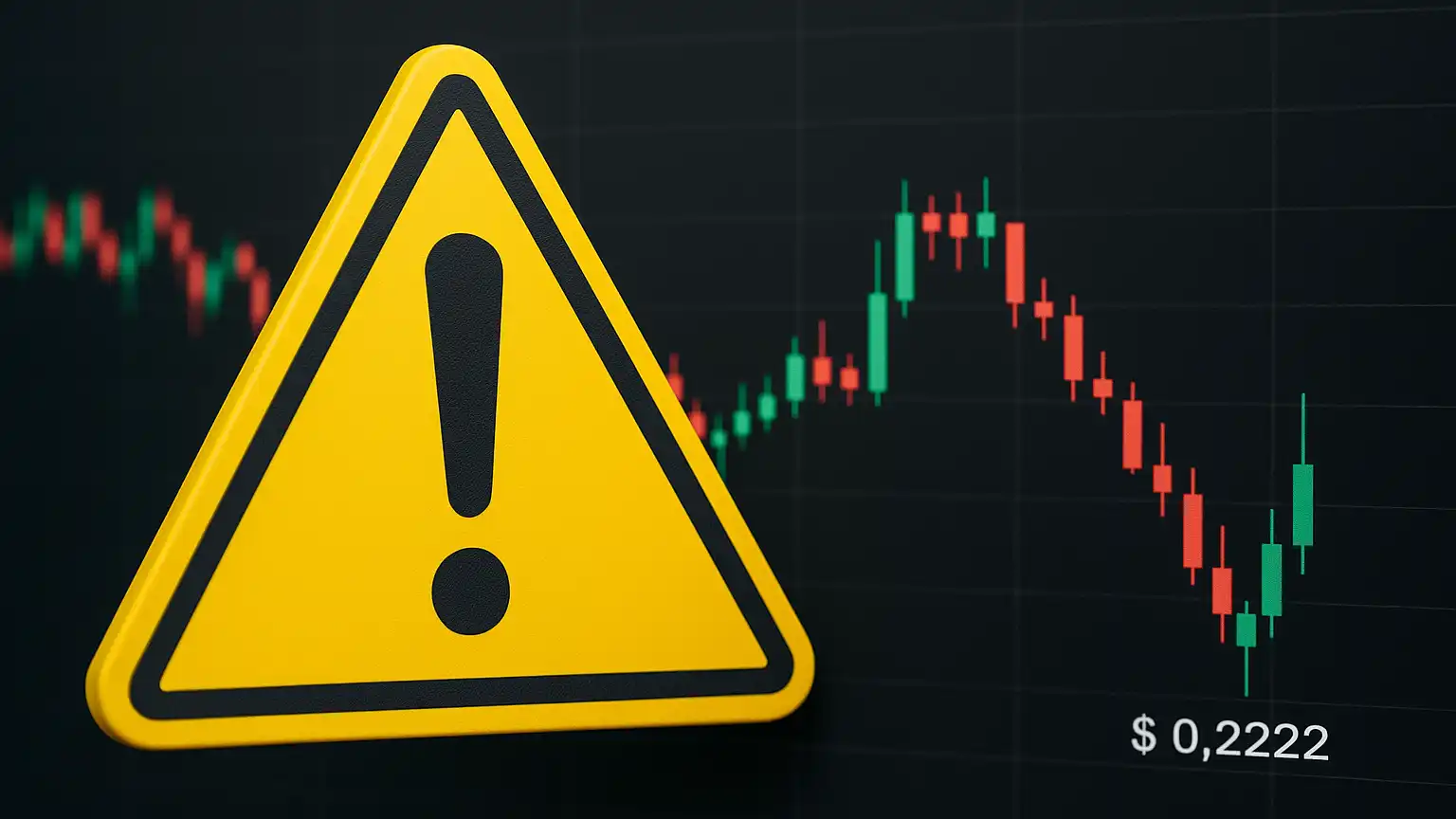
The key support zone to watch is around $0.170–$0.173, with stronger support closer to $0.160–$0.165. On the resistance side, there’s immediate pushback around $0.200–$0.205, with more significant resistance between $0.210–$0.215. These levels line up with Fibonacci retracements from the recent high of $0.2233 down to current lows. If we break below $0.170, things could get ugly fast with a potential drop to $0.150. On the flip side, any real recovery needs to see volume-backed momentum pushing through $0.200 to have a shot at testing higher levels.
Price Prediction Scenarios
Bullish Scenario
If USD1 really takes off—meaning more total value locked, regulatory green lights, and actual usage as a go-to stablecoin pairing—then $B could reclaim those moving average zones. In an optimistic scenario, we’d be looking at a move toward $0.200–$0.215, possibly stretching to $0.230–$0.240 if the volume really shows up. But let’s be realistic: this scenario needs some serious catalysts. We’re talking clearer stablecoin regulations, genuine demand for USD1, or maybe a listing on a major exchange. Without these, any rallies will probably get sold into.
Bearish Scenario
Given all the sell signals we’re seeing right now—moving averages acting as ceiling, negative MACD, weak momentum—the path of least resistance seems to be down. If that $0.170 support gives way, we could easily see a test of the $0.150–$0.160 range. If volume continues to dry up, the decline could speed up, especially if the broader market turns risk-off. The $0.160 level is really critical here. Losing that support tends to trigger much steeper drops.
Key Metrics to Monitor
Keep a close eye on daily trading volume—big spikes usually come right before major price moves, especially when paired with news. Watch for any bullish divergences on the RSI or MACD, as those could signal we’re finding a bottom. Stay updated on any USD1 treasury announcements or new WLFI partnerships—whenever USD1 gets external validation, it tends to boost $B’s utility narrative. And finally, pay attention to exchange listings (or delistings), any regulatory guidance on stablecoins in major markets, and broader macro liquidity events. High-risk tokens like BUILDon are especially sensitive to these factors.