Current Landscape & Market Sentiment
Right now, the meme-coin Ducky is sitting at $0.0006819506952596264 against USDT, showing a small –0.70% drop over the last 24 hours. While that daily loss doesn’t look too scary, Ducky is actually dealing with some serious headwinds. The trading volume over the past day is practically nonexistent, and liquidity is paper-thin—which means prices can jump around wildly without much warning. With a massive supply of 420.69 billion tokens and about 414.4 billion circulating, the market cap barely cracks into the low tens of thousands. That’s a red flag for anyone looking at risk, since it screams speculative and fragile.
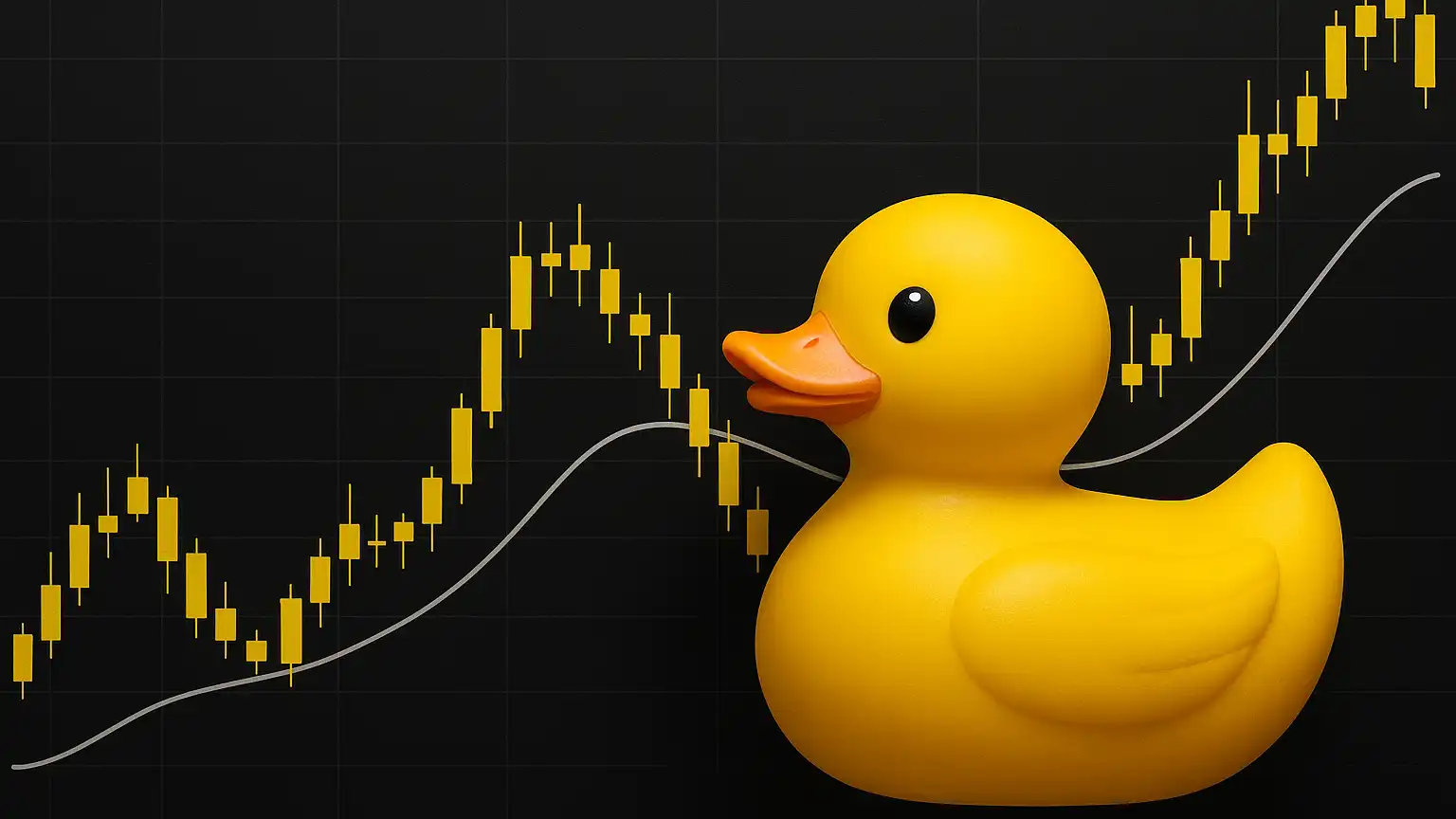
Looking at technical indicators from platforms like Bitget, the daily charts are painting a pretty bearish picture. Moving averages across the board—whether you’re checking the 10-day or stretching out to the 200-day—are almost all flashing “Sell.” The oscillators tell a slightly more nuanced story: mostly weak, but with a few oversold or neutral readings that could mean a bounce is possible if things shift. The problem is, there aren’t any strong positive catalysts or meaningful project updates to get excited about right now.
Key Technical Indicators & Price Zones
Relative Strength Index (RSI): Hovering around the mid-40s on most charts, which puts it in a sort of no-man’s-land—not deeply oversold, but not overbought either. So we’re not getting clear reversal signals from the RSI just yet.
MACD & Trend Indicators: The MACD lines are sitting below the signal line on the daily charts, which confirms bearish momentum is still in play. The Average Directional Index (ADX) is reading above 40, telling us there’s definitely a trend happening—unfortunately, it’s pointing down, not up. The price is trading well below all the important exponential moving averages (10, 20, 50, and 100-day), which means those are acting as resistance walls right now.
Support & Resistance Levels:
• The first resistance barrier you’ll hit is probably around where the 10-day and 20-day EMAs are sitting. If price manages to break through that, the next test would be the longer EMAs around the 50-100 day range.
• As for support, it’s looking pretty weak. The best bets are at old consolidation lows or round-number psychological levels. If those break, we could see some sharp drops because there’s not much underneath to catch the fall.
Short-Term Scenarios (1–4 Weeks)
Over the next few weeks, Ducky might manage a quick bounce if current support levels hold up. If the RSI climbs back above 50 and we get a MACD crossover, that could push the price toward those resistance zones where the moving averages are clustered. But here’s the thing—those moving averages are basically acting like a ceiling right now. If volume stays low and attention keeps shifting to other projects instead of meme coins, we’ll probably just drift sideways or keep sliding slowly. Breaking below the nearest support could send the price hunting for even lower levels.
Medium-Term Outlook (1–3 Months)
Looking out over the next couple of months, unless something changes—like actual roadmap progress, new exchange listings, adoption news, or fresh integrations—expect the downward pressure to continue or at best some sideways chop. In the best-case scenario, price might climb back up to test those medium-term moving average resistance zones and find a temporary ceiling there. Worst case? If the broader market turns sour or the community loses interest, this coin could slide toward its all-time lows. With such high supply and barely any liquidity to cushion the fall, that’s a real risk.
Price Prediction & Risk Assessment
Based on what the technicals are showing right now, if market sentiment doesn’t completely collapse, Ducky will probably bounce around between its immediate support and that moving average resistance cluster. A realistic trading range for the next month would be somewhere between ≈$0.00055 on the low end and ≈$0.00090 on the high end, with plenty of choppy moves in between. If it breaks above $0.00090 with decent volume and some good news, we could see a run toward $0.00110.
On the flip side, if support gives way—especially if sentiment turns more negative—we could be looking at a slide down to the $0.00040-$0.00050 range. With such shallow market depth, liquidations could pile up fast and accelerate the drop. Don’t forget the risks here: barely any trading volume means you’ll get slippage on orders, and the enormous supply makes sustained rallies really hard unless demand suddenly explodes.
Potential Catalysts & What to Watch
For Ducky to turn things around and shake off this weakness, we’d need some real catalysts: announcements about actual utility or partnerships, getting listed on bigger exchanges, more transparency around liquidity and tokenomics, or some kind of grassroots community campaign that rebuilds trust. On the other hand, any whiff of governance problems, delisting threats, or scam allegations—which are unfortunately common with low-cap meme coins—could tank the value fast.
It’s also worth keeping an eye on the bigger crypto picture. Overall market sentiment, Bitcoin’s dominance, regulatory headlines, and DeFi liquidity trends all tend to have a strong correlation with how meme coins perform. Ducky is especially vulnerable to these outside forces.
Risk Control Advice
If you’re thinking about trading this, keep your risk management tight. Use small position sizes, set stop-losses just below key support levels, and take profits before you hit resistance zones. Scaling into positions gradually instead of going all-in at once helps protect you in such a volatile token. And whatever you do, make sure any indicator signals you’re following are backed up by volume confirmation—don’t chase price moves that aren’t supported by real trading activity.