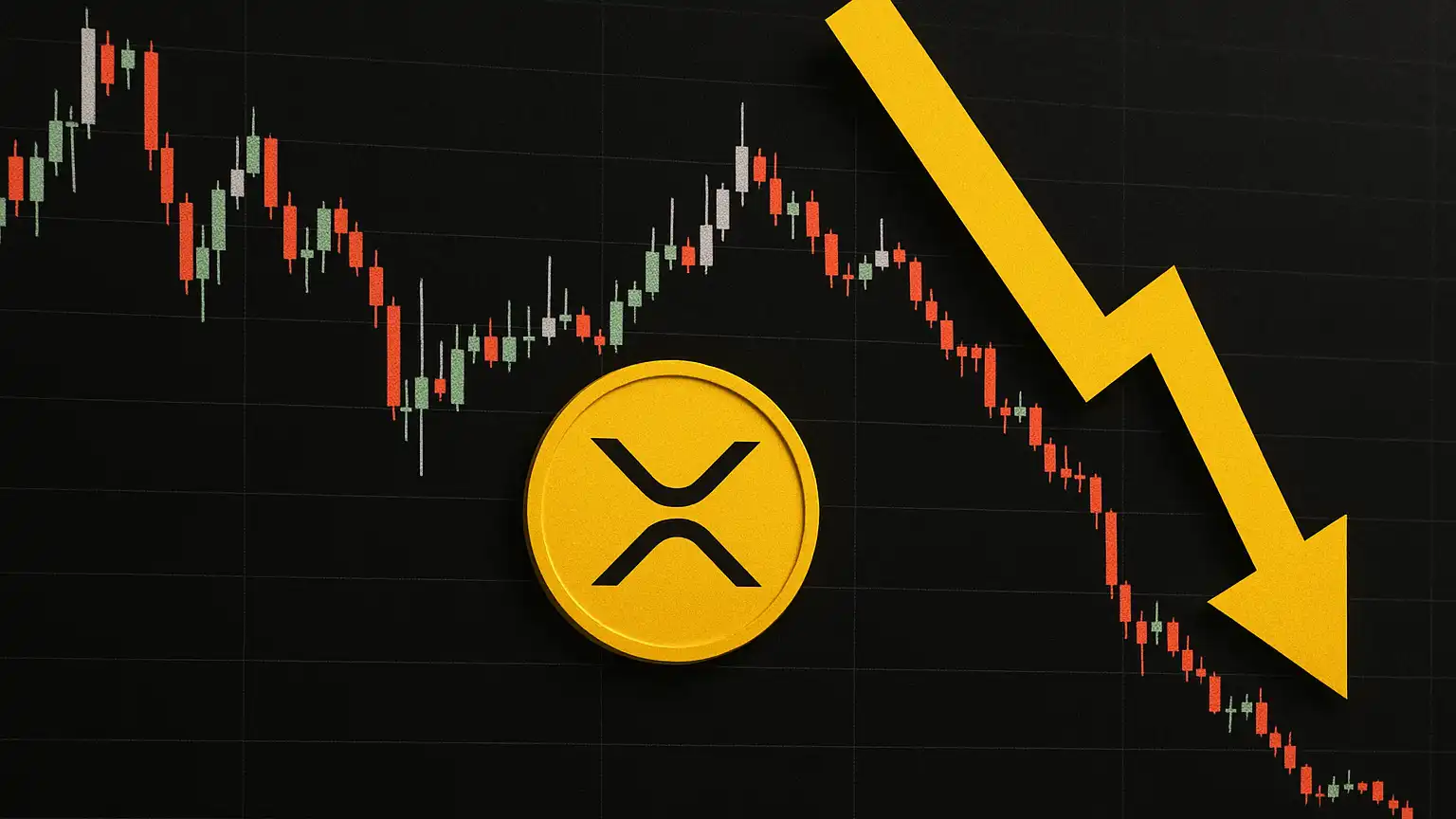
In a dramatic turn that caught even seasoned traders off guard, XRP plunged by 42% in late October, touching lows of $1.53 after what many expected to be a bullish period fueled by exchange-traded fund (ETF) inflows. Despite increasing institutional interest and a flurry of positive headlines, XRP’s fall underscored the persistent disconnect between crypto fundamentals and price action—and renewed questions around token liquidity, market structure, and sentiment.
The “Sell-the-News” Reality Behind XRP’s Drop
According to crypto analyst Zach Rector, who spoke recently on the Paul Barron Podcast, the sharp decline wasn’t entirely unpredictable. Rector described the market’s reaction as a classic “sell-the-news” event—where traders, anticipating gains following the launch of XRP ETFs earlier in the quarter, instead took profits immediately after the news hit the mainstream. Such behavior, common in crypto markets, has historically followed large announcements such as token listings or major partnerships.
“ETF launches often bring speculative enthusiasm,” Rector explained. “But that momentum rarely sustains unless backed by consistent on-chain accumulation or aggressive exchange activity. Here, neither of those materialized in time.”
Why ETF Inflows Didn’t Reflect in Public Market Pricing
While over $803 million reportedly flowed into XRP-focused exchange-traded products in November, these purchases occurred off-public exchanges—limiting their immediate impact on XRP’s traded price. Rector emphasized that much of this institutional demand was settled over-the-counter (OTC), where trading doesn’t push the market price upward the way centralized exchange buying does.
Simultaneously, roughly $808 million worth of XRP was sold across public exchanges during the same period—a near-perfect offset. “You have ETF inflows happening quietly in the background,” noted Rector, “but if public market sellers are dumping nearly as much, the net effect is zero—or worse, negative when panic sets in.”
Investors Pulling Funds: The Silent Force Dragging Prices
The selling pressure from public investors was not incidental. November marked a pronounced outflow from centralized exchanges, as traders swapped XRP for USDT, USDC, or exited to fiat altogether. This liquidity exodus hindered any momentum the ETF fund inflows might have created.
“When ETF Demand Hits the Order Book, Everything Changes”
Rector pointed out that the critical turning point will only come when institutional buyers push orders through public order books rather than private desks. “That’s when you get those violent upward moves,” he said. “Retail will chase green candles, and the exponential phase begins.” Until then, ETF interest alone remains a bullish signal in theory, not practice.
Looking Back to Move Forward: What Market Cap Signals Tell Us
XRP’s ability to recover remains strong, at least historically. In stark contrast to November 2025’s $41 billion market cap drop, November 2024 saw an unprecedented $100 billion surge. Similar patterns were seen in 2017 and 2021, where XRP rebounded sharply after long dormancy.
“We have to remember that crypto markets are narrative-driven but memory-rich,” Rector said. “Once confidence returns, XRP can turn in 48 hours—what took weeks to fall can be undone in days.”
Could XRP Revisit $1? Analysts Say It’s Unlikely
For investors wondering how low XRP could go, Rector offered a definitive stance: “Not a chance,” he said, affirming that a return to $1 would require a systemic shock—akin to a black swan event. He listed three reasons: deep liquidity from institutional desks, layered buy walls in the $1.80–$2.00 zone, and a long-term holder base that views sub-$2 levels as opportunity.
A Glimpse at the Buy Side: Support Levels Are Growing
Buy orders on leading exchanges already confirm strong interest just under current levels. Rector personally disclosed having a buy position set at $1.91, reinforcing that even the most bearish traders expect floors around $1.80 to hold barring macroeconomic surprises.
Past performance also supports this notion. XRP recorded higher lows in each corrective cycle over the past year—$1.60 in April, $1.77 in October, and $1.81 in November. These data points suggest that while upside momentum has stalled, downside risk is tightening.
Final Thought: Frustration Now, Asymmetry Later?
XRP’s crash stunned many, but the broader picture is more balanced than the headlines suggest. Yes, prices collapsed—but not because XRP lacks institutional demand. Rather, it’s a matter of when that demand turns from passive to active. With ETFs now a fixture and the narrative resetting post-crash, XRP might be entering a coiled phase—frustrating to ride through, but often the prelude to explosive moves.
“As long as fundamentals improve and macro doesn’t cave in, XRP’s volatility should eventually shift upward,” Rector concluded. “Until then, patience isn’t just a virtue—it’s entry alpha.”