A Strategic Reflection Rooted in Cultural Lore
In a message shared via social media, Kitao urged corporate leaders to remain vigilant during prosperous times—a nod to the inherent risks disguised as success. Drawing from the metaphor of the Fire Horse year, he noted that seemingly stable periods often carry the seeds of future disruption. “When a company is doing well, the greatest danger lies in arrogance and overconfidence,” he wrote. It was more than historical musing; it was a direct appeal to moral base and foresight in governance. According to Kitao, true leadership lies not in expansion at all costs, but in strategic humility and disciplined judgment, especially as the market applause grows loudest.
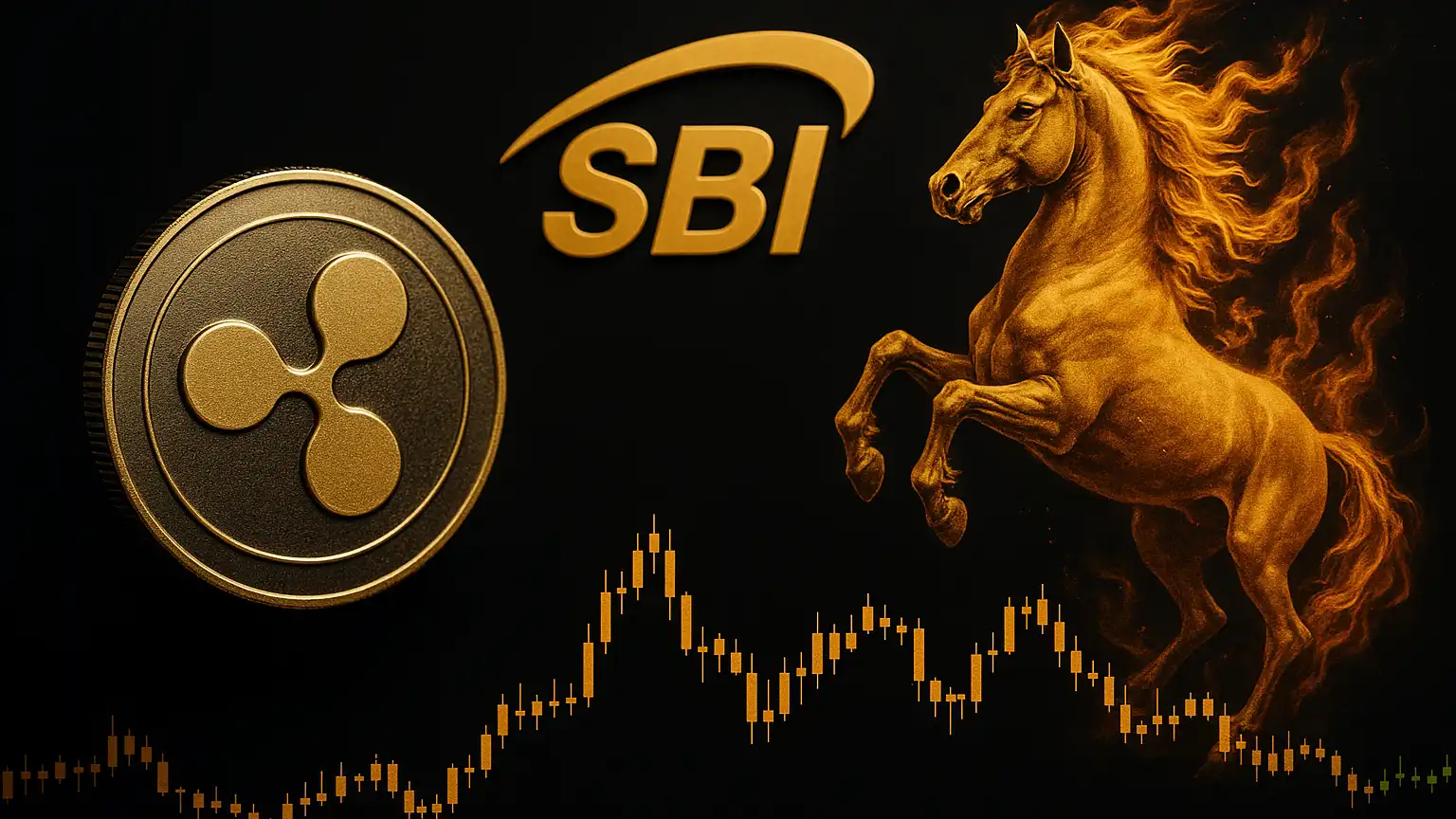
The Fire Horse isn’t merely symbolic. Historically, the 1966 Fire Horse birth year saw a notable drop in Japan’s birthrate, due to traditional beliefs about volatility and misfortune. It remains culturally charged—apt timing, perhaps, for an industry like crypto that thrives on disruption. Kitao’s invocation of this cycle wasn’t idle rhetoric—it was a calculated cultural reference signaling turbulence ahead and the need for adaptability.
Decade-Long Vision: Ripple, Blockchain, and SBI’s Commitment
Kitao’s message also spotlighted SBI’s steadfast focus on emerging technologies since the early 2010s. As far back as 2018, the firm had publicly framed artificial intelligence and blockchain as foundational technologies—not speculative experiments, but enduring forces reshaping global finance. Over time, SBI has constructed a robust and integrated crypto ecosystem, including digital asset exchanges, tokenized asset platforms, and most notably, a strategic equity stake in Ripple Labs.
“It was about ten years ago that we invested in Ripple Labs in the U.S. and acquired approximately 10% of its shares,” Kitao recalled. That early conviction has blossomed into one of the more successful blockchain alliances in financial services. Ripple’s technology, focused on real-time cross-border payments and enterprise-grade crypto solutions, has become increasingly relevant as legacy banking systems bump up against the bottlenecks of globalization. For SBI, Ripple now represents not just an investment—but a cornerstone of its revenue model and an anchor of its digital asset strategy.
Market Signals and Messages for an Industry in Transition
The timing of Kitao’s comments is no accident. 2024 and 2025 have already seen major regulatory shifts around digital assets in Asia and abroad. Japan, home to SBI, has quietly become one of the most consistent and sophisticated jurisdictions for digital asset governance, even as others remain stuck in reactive policymaking. In this climate, Ripple’s presence—and by extension SBI’s commitment to blockchain infrastructure—gains credibility.
Ripple as a Barometer, Not Just a Brand
From a market perspective, Ripple’s story is increasingly viewed as a bellwether for institutional crypto integration. Its ongoing legal entanglements with U.S. regulators, while significant, have not dampened the confidence of long-term partners like SBI. Instead, they showcase how early-positioned entities can weather political storms when their tech stack genuinely solves real-world problems. The fact that Ripple continues to be highlighted in SBI updates suggests that Kitao sees it not merely as a partner, but as a symbol of smart, durable disruption.
It also carries implications for other firms watching the Asian fintech landscape. In featuring Ripple so prominently, Kitao implies not only confidence but a quiet challenge to other financial players: if you wait for clarity before acting, the future may be written without you.
2026 as a Litmus Test for Integrity and Endurance
But Kitao’s message wasn’t limited to technology or market dynamics. Looking ahead to 2026, he described it as a “year when hidden problems come into the open.” In a landscape where reputation and compliance are increasingly scrutinized, Kitao warned that issues buried during high-growth years—be it mismanagement, legal risk, or strategic misalignment—will inevitably surface with greater intensity. He cited both global and domestic examples of enterprises now wrestling with the consequences of past oversight.
His advice: discipline over hype, transparency over narrative, and sustainability over speculation. It is a tone well-suited to the moment—firm yet forward-looking. For an industry often accused of glamorizing disruption at the expense of responsibility, it was both a sobering reflection and a reaffirmation that crypto’s next chapter will require not only innovation but integrity.