
Current Landscape & Introducing Recent Developments
PYTHIA (ticker: PYTHIA/USDT) is currently trading around $0.0490, showing a modest dip of roughly 0.7% in the last 24 hours. When you zoom out to longer timeframes, things look a bit rougher: the token has shed nearly 10% over the past month, moving further away from its all-time high of about $0.1259 that it hit back in late August 2025. Right now, there are close to 1 billion tokens in circulation, putting the fully diluted market cap at around $49 million.
On the news side, sentiment is getting a boost from PYTHIA’s involvement in DeSci (decentralized science) and biotech research. The partnership between Orama Labs and Kingnet Capital—a Web3 gaming company—is being seen as a positive for infrastructure credibility. There’s also buzz around upcoming roadmap items like “Human-AI Symbiosis Trials” and a wearable “Mind Tracker” device slated for Q1 2026, which are adding some narrative firepower. That said, profit-taking after previous events like airdrops and accelerator seasons has cranked up volatility quite a bit.
Technical Indicator Analysis & Key Pricing Zones
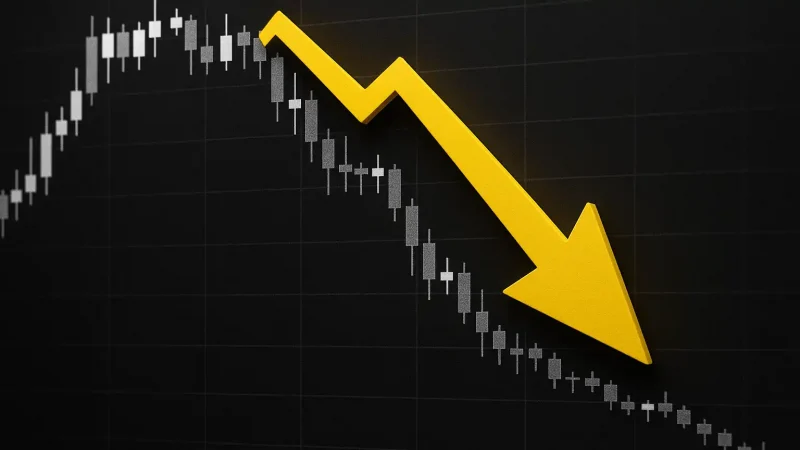
Looking at the daily chart, PYTHIA seems to be stuck in a bearish or neutral trend. The key moving averages—the 50-, 100-, and 200-day EMAs and SMAs—are all sitting above the current price, creating resistance zones in the $0.052-$0.065 range. The 14-day Relative Strength Index is hovering in the mid-40s, which means we’re not seeing extreme selling exhaustion or bullish overheating. MACD readings are pretty flat, showing a mild bearish tilt. Volatility-wise, the Average True Range is signaling elevated daily swings of around 8–10% of the price, so short-term trading carries more risk than usual.
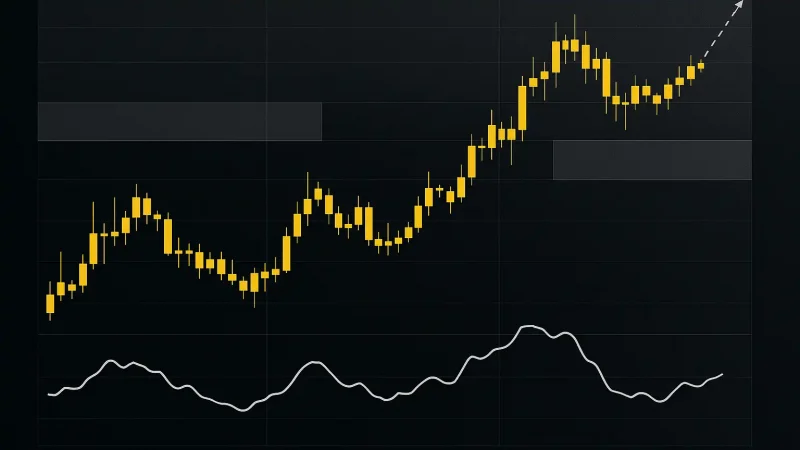
Support levels are starting to form: there’s near-term support at about $0.0481, which marks a recent low traders will want to see hold. If that breaks, additional support clusters around $0.045–$0.046 with moderate strength. On the flip side, resistance kicks in just above the current price, with the first hurdle around $0.0512-$0.0528. More meaningful resistance sits in the $0.055-$0.057 zone, where previous highs and moving averages come together.
Short-Term Patterns & Intraday Signals
On the hourly charts, PYTHIA is flashing oversold signals on Stochastic and Momentum indicators, but the price is still sitting below the 20- and 50-period EMAs, which isn’t great. Bollinger Bands haven’t squeezed tight yet, suggesting there could be more downside ahead if sellers stay in control. The risk of dropping toward immediate support around $0.048 is pretty real in the near term unless we see a sharp pickup in volume.
Forecast Scenarios & Strategic Price Prediction
Based on what the indicators and news are telling us, there are two main paths PYTHIA could take over the next 4-6 weeks:
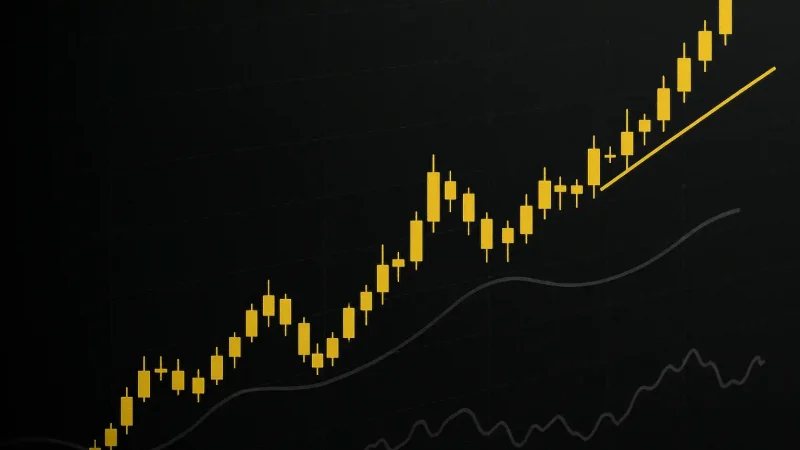
- Bullish Breakout Scenario: If PYTHIA manages to close above $0.0525-$0.0530 on the daily chart with solid volume behind it, that would clear the path to testing resistance near $0.055-$0.057. A sustained push past $0.060 could really shift sentiment and bring in fresh buyers. From there, momentum might carry it toward $0.070 if we get some positive catalysts like product launches or new partnerships.
- Bearish Slide Scenario: On the other hand, if support at $0.048 gives way, we could see a slide toward $0.045 or even $0.043 if sellers take over. A close below $0.0439—which is a 78.6% Fibonacci retracement from the all-time high to recent lows—could trigger accelerated downward momentum. Low volume and weak sentiment would only make things worse.
Looking at the medium term (3-6 months), if the team executes on the roadmap and gains traction, PYTHIA could try to reclaim those higher resistance levels. But breaking above the $0.065-$0.070 zone looks critical to getting back into a proper bullish trend. Without that, it’ll likely stay stuck in a range between support around $0.045 and resistance near $0.055, with occasional news-driven spikes.
For traders looking to get in, accumulating closer to support ($0.045-$0.048) with tight stop losses makes sense, while breakout traders should wait for volume confirmation above $0.052. Given the high volatility, position sizing should match your risk tolerance.
Emerging Indicators & Factors to Monitor
Key things to keep an eye on include progress on Orama Labs’ research and product releases, any regulatory developments around neural or biotech interfaces, and broader market rotation trends—especially Bitcoin dominance and how much funding is flowing into altcoins. Technically speaking, flipping those 100- and 200-day SMAs and EMAs from resistance to support would be a strong signal that the trend is reversing. Also watch for divergences—like RSI trending upward while price stays flat or falls—as those can hint at upcoming turning points.