
Current Market Landscape and News Signals
As we move through mid-January 2026, Jelly-My-Jelly (trading as JELLYJELLY/USDT) is sitting around $0.0668. The token has taken a small hit over the past day and isn’t really keeping pace with the broader crypto market. Looking back over the last month, though, things were pretty exciting—the token rallied somewhere between 50-60% before pulling back recently. Daily volume hovers in the $5-15 million range, which isn’t huge. That means the price can swing pretty easily based on trader sentiment and people cashing out profits.
On the news front, the platform made a pretty big move on January 2nd by opening up their video chat feature to all creators, ditching the old follower requirements. While that sounds like a solid step for actual utility, it looks like a lot of traders did the classic “buy the rumor, sell the news” routine, which explains some of the recent weakness we’re seeing.
Technical Indicators: Structure, Strengths, and Weaknesses
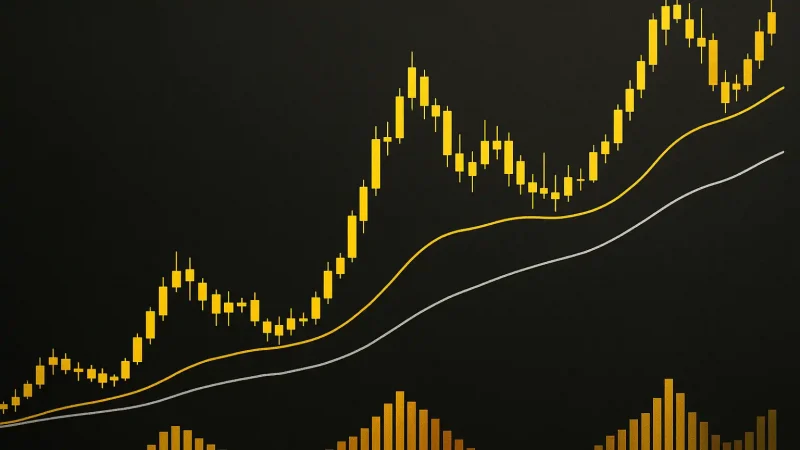
The technical picture is a bit of a mixed bag right now. On the bright side, the key moving averages—your 50-day, 100-day, and 200-day—are all sitting below the current price, which suggests there’s some decent support underneath. The MACD recently flipped toward bullish, though it’s not exactly screaming momentum yet. If buying pressure comes back, these averages could help fuel a continued uptrend.
But here’s where it gets tricky. The RSI is hanging out around 50-55, basically right in the middle. That means the token isn’t overbought or oversold—it’s just kind of waiting to see what happens next. If support around $0.06 doesn’t hold, we could see a steeper drop. And with volume cooling off from those recent peaks, there’s less liquidity cushioning any moves. That can make things choppy and unpredictable.
Support, Resistance & Pattern Outlook
• The main support zone you want to watch is between $0.060 and $0.062. These levels line up with recent lows and those longer-term moving averages we talked about. If price breaks cleanly below $0.06, that’s a bearish signal and things could get ugly.
• Resistance is parked in the $0.070 to $0.075 area. These are psychological levels where sellers might show up. If JELLYJELLY can push above $0.070 and actually stay there, we could see it testing $0.085 or even $0.10 if momentum really builds.
• The chart pattern looks like it’s forming a consolidation triangle over the past few weeks. We’re getting close to the point where it has to break one way or the other, and when it does, expect some volatility. Which direction it breaks will depend a lot on overall market vibes and any new developments.
Price Predictions Based on Multiple Scenarios
Starting from the current price of roughly $0.0668, here’s how things could play out over the next few months and into the longer term:
Bearish Scenario:
If that $0.060 support gives way, we could see JELLYJELLY drop down to somewhere between $0.045 and $0.050. That’s looking at a 25-30% decline from here. This would happen if the broader market turns sour, social media buzz fades, or we get hit with negative macro news.
Base-Case / Neutral Scenario:
Price probably chops around between $0.060 and $0.075 for a while. We might see some attempts to push higher, but nothing that really sticks until we get fresh catalysts—like stronger adoption numbers or new features. Breaking above and holding $0.070 would be the first real bullish sign to watch for.
Bullish Scenario:
If demand picks back up—maybe from solid platform growth, new exchange listings, or renewed market excitement—JELLYJELLY could climb to $0.100-$0.130 over the next couple months. Looking out over a full year, we might be talking about $0.13-$0.15 if things go well. Some longer-term models even suggest $0.40+ is possible over the next few years, but that would need sustained real-world usage and a friendly overall market environment.
Key Risks & Signals to Monitor
• Watch the volume closely. If we’re seeing sideways or even slightly positive price action but volume keeps dropping, those rallies probably won’t last.
• Keep an eye on whale activity. If a handful of big holders control too much of the supply, you risk sudden dumps or price manipulation. Knowing how spread out the ownership is matters.
• Platform usage is going to become increasingly important. How much is the token actually being used? Are creators sticking around? Real adoption metrics will separate genuine projects from flash-in-the-pan hype.
• Don’t forget the bigger picture. What Bitcoin and Ethereum do, regulatory changes, and broader economic conditions all flow downstream to smaller tokens like JELLYJELLY—often more dramatically than they affect the big players.