Recent Developments & Market Sentiment Shift
The meme-coin Jelly-My-Jelly, which trades under the ticker JELLYJELLY against USDT, has been on quite a wild ride recently. Not long ago, it touched an all-time high near $0.50 while the broader market was struggling, pushing its market cap close to $500 million before pulling back. That sudden spike raised some eyebrows—analytics platforms flagged potential manipulation after noticing that a bunch of dormant wallets suddenly withdrew roughly 20% of the total supply from centralized exchanges, which may have squeezed liquidity right before the price took off. It’s also worth remembering the HyperLiquid controversy from March 2025, where aggressive leveraged trading and sudden price swings eventually got the token delisted from some platforms.
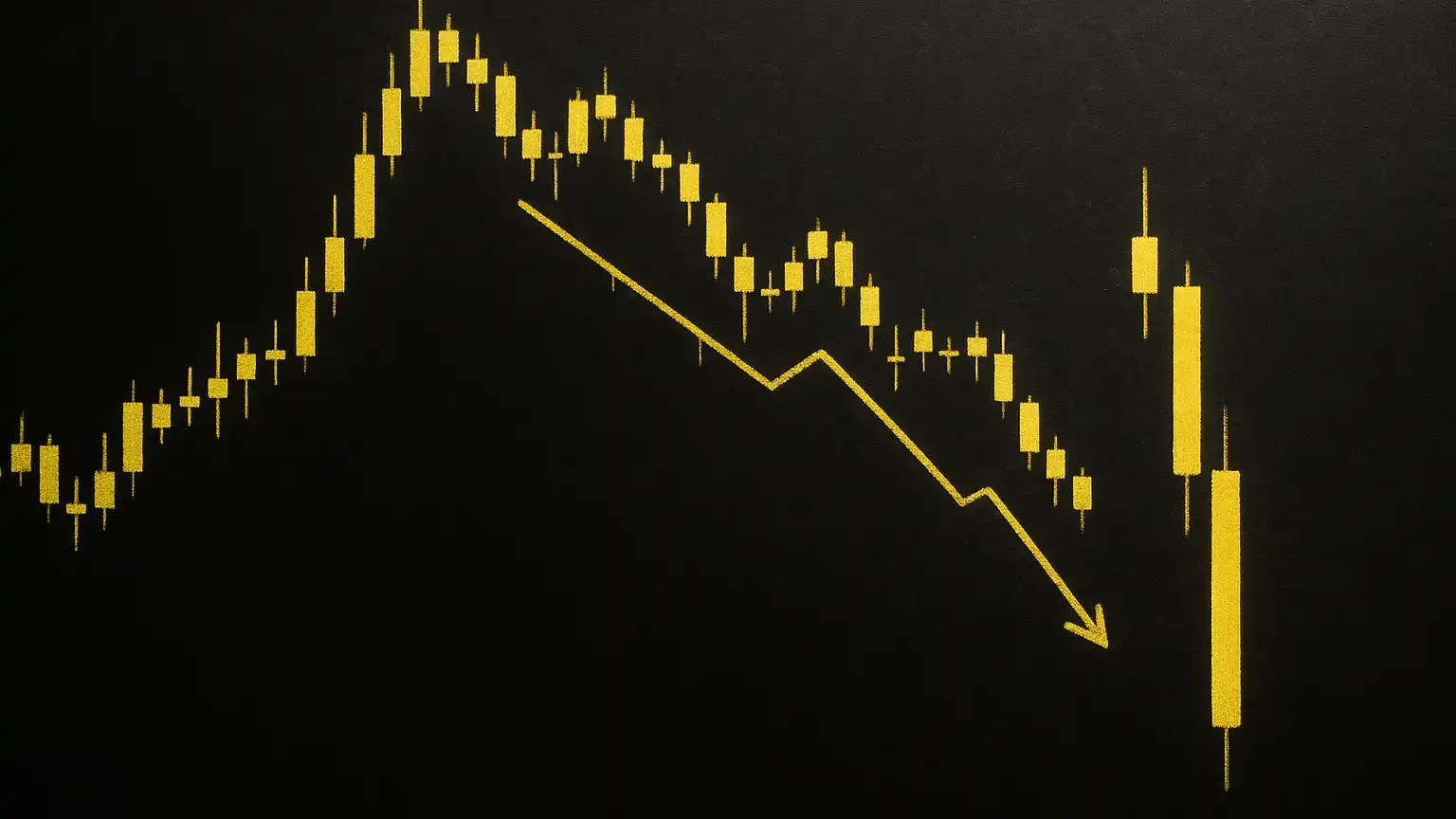
Fast forward to now, and JELLYJELLY is trading just above $0.06—that’s a brutal drop of more than 80% from its peak. In just the last 24 hours alone, it’s down around -23.33%, which shows you how negative the mood is among traders right now. The project keeps talking about integrating with social apps, but there’s still not much to show for it in terms of real utility. Without that, it’s heavily dependent on hype and community energy, which makes it incredibly risky and prone to these massive swings.
Technical Patterns & Key Indicator Signals
Looking at the charts on shorter timeframes, the picture is pretty grim. Pretty much every momentum indicator you’d normally check—MACD, RSI, Stochastic, Vortex, Fisher, and DMI—is pointing downward on the hourly charts. That tells you sellers are in control and buyers just aren’t showing up with any real conviction. The only indicator flashing even a hint of bullishness is PSAR, and honestly, that’s pretty weak and could easily flip if the selling continues. The ATR shows volatility is high, but there’s no clear direction emerging from it yet.
There are some important price levels worth keeping an eye on. Resistance is stacking up around $0.077–$0.096, especially near that $0.07885 equilibrium zone and the recent high around $0.09672. Unless something big changes, those levels are likely to act as a ceiling. On the downside, there’s some support around $0.0735 and $0.0702, with a more critical floor at $0.06098. If it breaks below that last one, things could get ugly fast. To really shift the momentum, we’d need to see a convincing break above those resistance zones with strong volume behind it.
Support & Resistance Matrix
- Key Resistance Levels: ~$0.0778, then ~$0.0877–$0.0967
- Key Support Levels: ~$0.0735, ~$0.0702, most critical ~$0.06098
- ATR (Volatility Gauge): There’s enough movement to test these levels, but no real breakout strength showing up yet
- Volume Behavior: No volume spike strong enough to suggest a reversal is coming; the elevated 24-hour volume is mostly coming from selling pressure
Price Prediction Scenarios & Risk Assessment
With the current price sitting at $0.060094798391443736 and losses exceeding 20% in just one day, JELLYJELLY is in a pretty precarious spot. There are basically three ways this could play out, depending on whether the selling keeps going or if something sparks a recovery.
- Bearish Continuation: If the price breaks cleanly below that ~$0.06098 support—especially if it closes below that level with solid volume—we could easily see it head down to the $0.045-$0.050 range. With liquidity being thin and so much supply concentrated in a few wallets, pressure from large holders could accelerate the decline.
- Consolidation/Possible Reversal: If it manages to hold above $0.06098, we might see it trade sideways between $0.060 and $0.075 for a while. Any real recovery would need a push above $0.0778, backed by decent volume and ideally some positive news or actual product development.
- Bullish Turn (Less Likely Without Catalyst): If something big happens—like they actually deliver on promised features, announce a meaningful partnership, or get some regulatory clarity—then a rally back toward $0.20−$0.35 isn’t completely out of the question. But that would require breaking through ~$0.0967 resistance with sustained volume behind it. Based on this token’s history though, those kinds of moves are rare and usually don’t last long.
The risk here is still really high. A lot of the tokens are held by a small number of wallets, which makes manipulation a constant worry. There’s minimal actual utility being adopted, and the recent price action has shaken confidence among anyone who was in it for the longer term. If you’re holding this or thinking about buying in at these levels, you should be ready for massive volatility and have your stop losses tight.