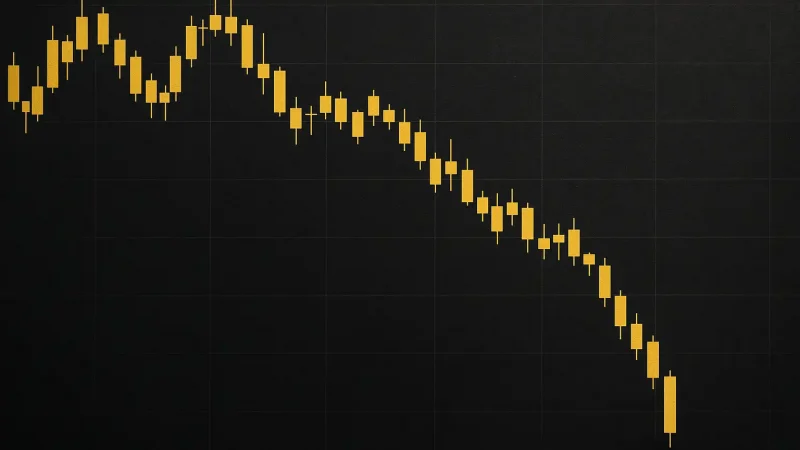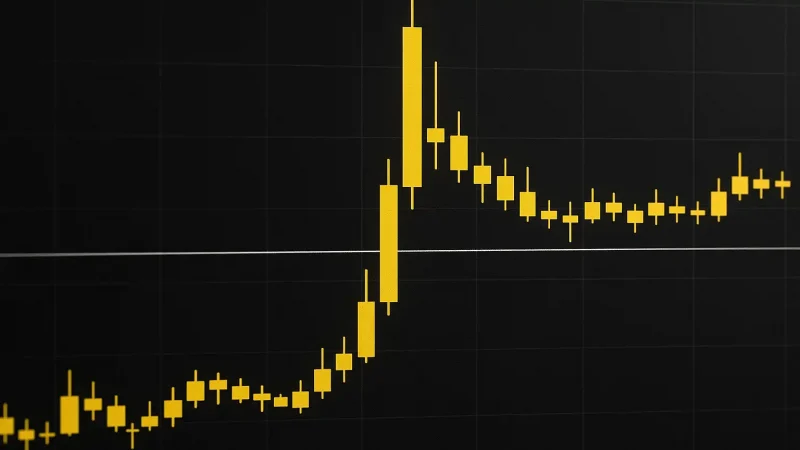

Dogwifhat (ticker WIF) has been sitting at a pretty low price of around $0.2257, with a modest 24-hour bump of about 1.89%. This is a far cry from where things stood earlier in 2025, when WIF was flirting with or even sitting above the $1.00 mark. Looking at various technical analyses out there, the consensus seems to be that WIF is stuck in a bearish or neutral pattern on the longer timeframes. The price has slipped below important moving averages like the 50- and 200-period EMAs, which isn’t exactly encouraging. The Relative Strength Index (RSI) is hanging around neutral to slightly oversold territory (sitting at 42 on the daily chart), and the MACD isn’t really showing much conviction in either direction lately. What we are seeing is some serious volatility, with Average True Range (ATR) readings telling us that big swings—both up and down—are still very much in play.
Recent reports are pointing to support levels somewhere in the $0.18–$0.20 range that might be holding things together for now, while resistance around $0.26–$0.30 could act as a lid on any upside attempts. The broader vibe suggests that unless buyers can push the price convincingly above those resistance levels, we might see more downside ahead. There aren’t any major fundamental developments or fresh catalysts coming through the news cycle that would suggest a breakout is around the corner. Right now, it’s all about technicals and market sentiment.
Looking at the latest short- to mid-term data, particularly from the 4-hour chart, here’s what we’re seeing:
– RSI (4-hour): ~52.9 — sitting pretty much in neutral territory, which means we’re not seeing strong overbought or oversold pressure at the moment.
– MACD (4-hour): The MACD line is roughly -0.000789, with the signal line at -0.001741, giving us a slightly positive histogram of about +0.000952. This hints at a bit of bullish momentum trying to build, though the numbers are small and could easily flip with any sudden moves.
– SMA vs. EMA (4-hour): The SMA is hanging around $0.22593, just a touch above where we are now, while the EMA at roughly $0.22499 is sitting slightly below. This tells us the price is basically sandwiched between these short-term averages, which usually means we’re stuck in a range.
– Daily Pivot Points: The pivot point is sitting at about $0.2267, with first resistance (R1) around $0.2293 and first support (S1) near $0.2233. These are tight levels, suggesting the price could bounce around in this zone unless something stronger comes along to push it out.
– Rate of Change (ROP/ROC, daily): The daily ROC is showing about +8.65%, which indicates that even with the overall downtrend, there have been some recent bursts of upward movement worth keeping an eye on.
When you zoom out to the daily timeframe, it’s clear the price is trading below both the 50- and 200-period exponential moving averages, and most technical analysts are calling the overall trend bearish. The ADX suggests there’s moderate trend strength, but the direction is still pointing down unless those support zones can spark a reversal. Resistance between $0.26–$0.30 looks like a real hurdle. On the downside, support is clustered around $0.18–$0.20, an area that’s shown some historical importance. The Bollinger Bands aren’t showing a significant squeeze yet, but volatility is still elevated—the ATR is running at nearly 10% of the current price on some charts.
Putting everything together—the current price action, indicator readings, and key levels—we can sketch out a few possible scenarios:
– Bullish Breakout Path: If WIF can push cleanly above $0.26 with some decent volume backing it up, we could see a test of resistance in the $0.28–$0.30 zone. Getting above $0.30 would be a bigger deal and could open the door to moves toward $0.35, assuming the short-term averages (EMA/SMA) cross to the upside and momentum indicators like RSI and MACD confirm the strength.
– Neutral / Range Bound Path: Given that the price is hovering near short-term SMA/EMA levels, there’s a good chance WIF just stays trapped between roughly $0.20 and $0.26 for a while. Unless we get some kind of catalyst or a broader meme coin rally, traders will probably keep fading resistance and scooping up dips near support.
– Bearish Breakdown Path: If the price drops below that important support zone around $0.18–$0.20, we could be looking at a deeper selloff. Breaking that level increases the risk of a move down to $0.15 or even lower, especially since the moving averages and trend indicators are still leaning bearish. Without fresh buying interest, this negative pattern would likely continue.
Based on everything we’ve looked at, here’s where the short- to mid-term targets seem to line up:
– Immediate upside resistance: $0.25–$0.26
– Secondary resistance if we get a breakout: $0.28–$0.30
– Immediate downside support: $0.20–$0.22
– Stronger downside if selling picks up: $0.15–$0.18
While the technical picture shows potential moves in both directions, there are definitely some risk factors to keep in mind. First off, liquidity isn’t what it used to be during the earlier bull runs, which means big orders can really move the price around and add to the volatility. Second, meme coins are notoriously sentiment-driven, and without clear catalysts—like new partnerships, exchange listings, or development updates—any upward move would have to overcome resistance on vibes alone, without much fundamental backing. Third, many of the moving averages are still trending downward, so any real trend reversal is going to need strong and sustained buying pressure to make it stick.
For traders, smart position sizing is absolutely crucial with an asset like this. Setting stops just below strong support levels (say, below $0.20) can help limit downside risk, while taking profits around resistance zones can help you lock in gains before potential reversals. For those holding long-term, patience might eventually pay off, but only if you’ve got the discipline and a clear understanding of where the key technical breaks are sitting.