Recent Price Action & News Context
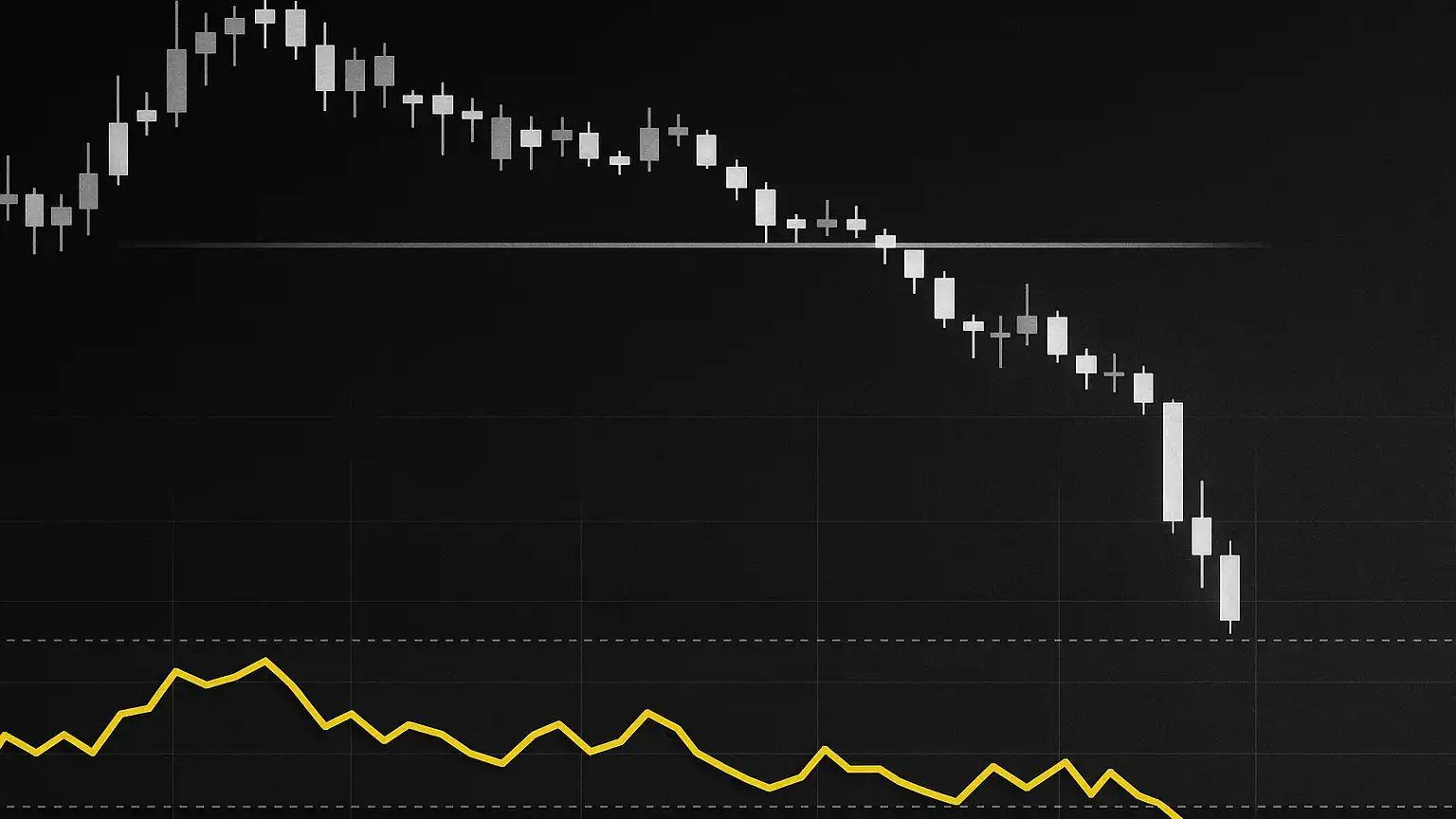
Dogelon Mars (ticker ELON/USDT) is currently sitting at around 4.03 × 10⁻⁸ USDT, after dropping roughly −5.11% in the last 24 hours. This sell-off reflects broader weakness across the meme-coin sector, with thin trading volumes and broader economic uncertainty weighing on sentiment. Recent technical analysis shows ELON as a strong sell across most daily timeframes. The Relative Strength Index (RSI) has tumbled deep into oversold levels—hovering between 22 and 30 on the daily chart—while both the 50-day and 200-day moving averages remain far above current prices, confirming the bearish momentum isn’t going anywhere soon.
On the news front, there’s not much happening specifically for Dogelon Mars. Most of the crypto headlines lately have focused on regulatory developments—things like stablecoin oversight and advertising guidelines—which tend to favor more established coins. Analysts are pointing to immediate resistance just above current levels, with support zones under pressure and at risk of breaking if buying interest doesn’t materialize soon.
Key Technical Indicators
When you look at the full range of technical indicators, the picture is pretty clear: the risk is tilted toward more downside, though there’s a chance we could see a quick bounce if oversold conditions start to ease up.
Trend & Moving Averages
ELON is trading below every major moving average—the 50-day, 100-day, and 200-day, whether you’re looking at simple or exponential averages. These averages are all pointing downward and acting like a ceiling. Any bounce attempts are likely to get capped pretty quickly unless we see a serious surge in trading volume.
Momentum & Oscillators
The daily RSI is buried in oversold territory—sitting in the low 20s—which tells us that sellers may have pushed things too far in the short term. Other indicators like the Commodity Channel Index (CCI) and Williams %R are showing similarly extreme readings. The MACD is either negative or flat, with no bullish crossovers in sight. The ADX readings suggest the downtrend is intact and gaining strength, though it’s not at panic levels yet.
Price Prediction Scenarios
Looking at the combination of oversold momentum, weak trend structure, and lack of positive catalysts, here are two realistic scenarios for where ELON might be headed in the near term:
Base Case: Continued Decline with Short Rebound Opportunities
In this scenario, ELON stays stuck in its downtrend and potentially drifts lower toward the $3.5 × 10⁻⁸ to $4.0 × 10⁻⁸ USDT range. There are support zones in that area where we might see temporary bounces—especially if oversold conditions trigger some short-covering. Resistance is likely to show up near the 50-day moving average, somewhere between $5.0 × 10⁻⁸ and $6.0 × 10⁻⁸ USDT, which could put a lid on any relief rallies. Breaking above that level would need either strong volume or some unexpected good news.
Alternate Case: Bearish Exhaustion Leading to Consolidation or Reversal
If sellers start to run out of steam—shown by things like the RSI climbing back up from oversold levels, a tightening Average True Range (ATR), or divergence between new price lows and momentum indicators—ELON might find a bottom. We could see a sideways trading range develop between roughly $4.0 × 10⁻⁸ and $5.5 × 10⁻⁸ USDT. From there, depending on broader market conditions and whether speculative interest returns, there’s a chance of a gradual climb back toward resistance at the 50-day average, with a more ambitious target around $6.0-7.0 × 10⁻⁸ USDT if sentiment shifts in a big way.
Investor Implications and Risk Considerations
Right now, ELON looks more suitable for traders hunting short-term oversold bounces rather than long-term investors—unless you have an exceptionally high tolerance for risk. The strong sell signals combined with sharply negative momentum make jumping in at these levels risky until ELON can prove it’s capable of reclaiming some key moving averages. Keep an eye on volume spikes, watch for the RSI to recover above the 30–35 range, and see whether resistance zones continue to hold firm with selling pressure. Without those confirmations, further downside is probably the path of least resistance.