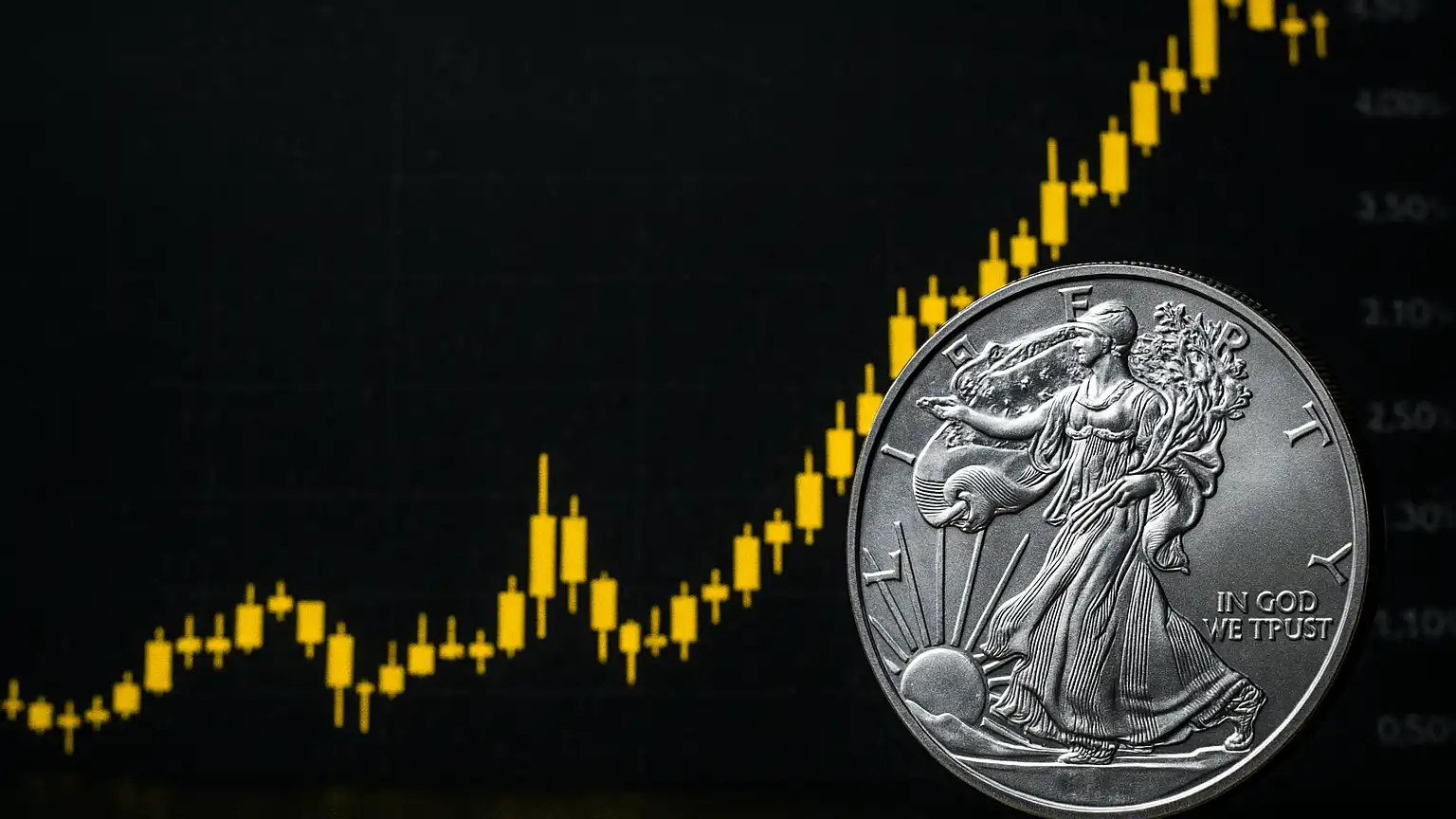
Silver, long seen as gold’s quieter cousin, has exploded onto the financial stage with a surge that few predicted. From under $30 an ounce just two years ago to projections nearing $200 in 2026, its ascent is being fueled by a convergence of industrial demand, geopolitical tensions, and structural market weaknesses. But what does silver’s surprising rally mean for cryptocurrencies—and are investors witnessing a new form of aligned commodity-token momentum?
Silver’s Supply Crisis and the Breakdown of the Paper Market
The recent spike in silver prices isn’t just a speculative bubble; it’s the natural culmination of years of mounting supply deficits. For nearly a decade, global silver consumption has outpaced mine production, with the gap papered over by increasingly thin inventories and strategic stockpiles. But now those buffers are running dry. Unlike digital assets that can be infinitely forked or replicated, silver’s physical nature limits its supply in a dramatic way—when it’s gone, it’s gone.
The situation escalated sharply when warehouse inventories on the COMEX—the primary U.S. exchange for silver futures—plunged to historic lows. Simultaneously, demand for physical delivery began to spike. Many hedge funds and industrial buyers started insisting on bullion rather than rolling contracts, forcing a reckoning between the physical and paper markets. Crypto investors, long wary of centralized supply dynamics, are watching closely.
China’s Role and the Global Commodity Chess Match
While the West focuses on mining output, China holds the ace in the game: its dominance in refining capacity. New export controls from Beijing have restricted the outflow of refined silver, effectively tightening the global supply overnight. Prices inside China now trade at a premium—offering a stark reminder of how geopolitical decisions can reverberate into physical commodities.
For decentralized finance (DeFi) advocates and tokenomics professionals, this offers a chilling lesson. What happens when a critical on-chain asset is suddenly constrained by centralized off-chain mechanisms? The silver market is acting as a real-world stress test for supply-side controls—akin to a token with flawed minting logic facing a liquidity run.
Parallels Between Silver and Crypto Scarcity Narratives
At the heart of both bitcoin and silver’s valuation is the theme of scarcity. Bitcoin’s 21 million coin cap was designed to mimic gold’s finite supply, but recent silver dynamics suggest that physical scarcity can be even more dramatic because of industrial utility. Silver isn’t just a hedge or store of value; it powers the grids, solar farms, and data centers underwriting everything from decentralized ledgers to AI infrastructures.
With solar panel production expected to consume over 20% of annual silver supply by 2026, and electric vehicles set to demand even more, investors are beginning to see silver as both a commodity and technology play. This dual-use reality is pushing funds that once focused exclusively on crypto or traditional metals into shared research desks and blended portfolio strategies.
Tokenization of Metals: The Next Frontier?
The convergence of crypto and silver isn’t just theoretical. Platforms are actively exploring on-chain silver-backed tokens, with some decentralized exchanges (DEXs) reporting increased interest in physical-asset custody chains. If silver becomes tokenized at scale—securely, transparently, and auditable—it could serve both as collateral in DeFi lending protocols and a volatile trading pair against major cryptos.
However, the recent refinery bottlenecks and ETF vault shortages underscore a key challenge: even if silver is tokenized, actual settlement and redemption remain bound to traditional logistics. Any DeFi silver play must confront these real-world constraints if it’s to avoid replaying the missteps of over-leveraged centralized exchanges.
Investor Reaction: From Gold Bugs to Crypto Maxis
Market reaction to silver’s run has been fierce. Retail investors, many of whom cut their teeth on meme stocks or altcoins, have jumped aboard amid online speculation and bullish TikTok charts declaring silver “the next bitcoin.” At the institutional level, several macro funds that previously rotated capital between gold and crypto are allocating to silver ETFs and futures, hedging against both inflation and energy-transition volatility.
Notably, prominent crypto figures like Robert Kiyosaki—author of “Rich Dad Poor Dad” and longtime bitcoin proponent—have endorsed silver’s long-term potential, predicting a possible move to $200 per ounce by 2026. He argues that both silver and bitcoin are “real money”—finite, non-government-controlled, and increasingly necessary in an over-leveraged fiat world.
Volatility Ahead—But So Is Momentum
While silver has cooled slightly from its recent peaks, premiums for physical metal remain high, signaling ongoing stress in the system. Crypto investors are no strangers to volatility, and they may find silver’s current trajectory both familiar and attractive. But as with crypto’s early years, the silver market will likely see flash crashes, manipulation attempts, and waves of speculative noise.
Yet beneath the turbulence lies a structural shift. The financial system is undergoing a recalibration, and both silver and crypto are playing increasingly essential roles. Their shared DNA—scarce, decentralized, mistrusted by institutions—may soon make them partners in the same macro thesis rather than competitors in the investor wallet.
A Monetary Future Rooted in Scarcity
As silver’s rally continues sending ripples across commodities, energy, and digital assets, one theme emerges unmistakably: the resurgence of hard assets in an age of soft currencies. Investors chasing performance increasingly seek assets that are limited not by code alone, but by the physical laws of extraction and utility. In that light, silver’s explosion isn’t just a wake-up call—it’s a reminder. Scarcity still matters. And in a market that blends atoms and algorithms, the assets that truly run out may one day be the most valuable of all.