
Once heralded as Ethereum’s most promising Layer-2 solution, Polygon (formerly MATIC, now POL) has weathered a turbulent crypto market and emerged poised for a potential rally. With transaction fees reduced and adoption among dApp developers climbing steadily, the once-stagnant asset is showing signs of renewed investor confidence. As 2026 unfolds, subtle shifts in technical momentum and on-chain network activity suggest that POL may be gearing up for a price resurgence—raising the critical question: Can it climb back to $1, and eventually hit the ambitious $5 mark by 2030?
Recovery on the Horizon: Technical Breakouts and Sentiment Shifts
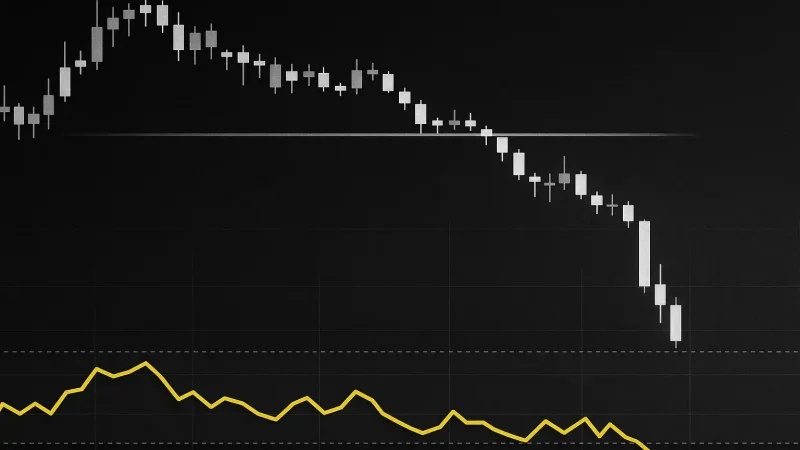
After a punishing 2025 that saw POL dip over 80% from its mid-cycle high of $0.76, the new year brought with it cautious optimism. Early January 2026 marked a significant technical moment: POL broke through the resistance zone of a falling wedge formation and logged a retest of the $0.20 level, coinciding with its 200-day exponential moving average (EMA)—a classic signal of reawakening bullish momentum.
While this price remains a far cry from POL’s all-time high of $2.92 (recorded in December 2021), the strength behind the breakout, evidenced by above-average trading volume, presents a strategic inflection point. Analysts now point to the $0.30 zone as the next resistance area. Surpassing it could validate this early trend reversal and trigger follow-through buying as confidence returns to the market.
On-Chain Activity: Smart Money Positions for the Long Game
Beyond price action, POL’s on-chain metrics present a compelling bullish case. The 30-day moving average of Daily Active Addresses (DAA) has seen a steady uptick, confirming that users are returning—not just sporadically, but with sustained engagement. This trend suggests that the underlying network utility is rebounding, validating Polygon’s long-term value proposition as a scalable, developer-friendly Ethereum-compatible platform.
Institutional Accumulation Strengthens the Foundation
Of particular note is the behavior of large-scale holders. Wallets holding between 100,000 and 10 million POL—often associated with institutional investors and “crypto whales”—are not just maintaining their positions but growing them. This cohort has historically functioned as a leading indicator, entering positions during market weakness to set the stage for major price expansions.
This activity not only reflects renewed conviction but may also suppress future sell pressure, creating an increasingly illiquid supply landscape. For a digital asset like POL—whose price is greatly influenced by liquidity shifts—this distribution dynamic can meaningfully accelerate upside potential in times of renewed demand.
Realistic Long-Term Forecast: From Recovery to Resurgence
A look at conservative and optimistic forecasts paints a roadmap for POL’s gradual climb. While 2026 projections range between $0.18 and $0.75, the real milestones lie in 2027 and beyond. Analysts expect micro bullish cycles anchored by continued ETH scaling adoption and institutional integration of Web3 infrastructure tools—niches where Polygon excels.
By 2028, POL is projected to test ranges as high as $1.93, fueled by compounding utility, developer loyalty, and a maturing Ethereum ecosystem. If this trajectory holds—and barring macroeconomic disruption—some models expect POL to breach the symbolic $4.00 barrier by late 2029, placing the $5.00 mark within striking distance by 2030.
Conclusion: A Crypto Veteran’s Second Act
Polygon is no stranger to cycles of hype and disillusionment. It surged during DeFi summer, adjusted to user burnout from high gas fees, and rebranded to POL as Ethereum’s long-term scaling enabler. Yet, its greatest test may lie ahead—re-establishing itself not just as a cheaper alternative to Layer-1 Ethereum, but as an indispensable piece of the Web3 toolkit.
If on-chain activity continues to rise and key resistance levels are decisively broken, POL could surprise skeptics and reward patient investors. While $5 remains a bold target, it is no longer dismissed as a fantasy. For Polygon, the climb is steep—but the roadmap clearer than ever.