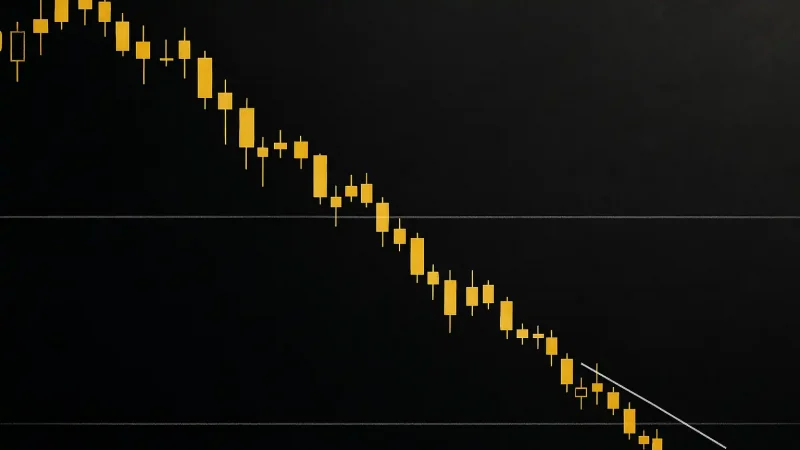

After staging an impressive multi-year rally fueled by institutional adoption and financial innovation, Bitcoin now appears to be entering a new, more precarious phase. According to on-chain data compiled by CryptoQuant, a noticeable reduction in BTC demand suggests that the top cryptocurrency may be losing vital momentum. This trend signals the start of a new downtrend, not because of oversupply or cyclical halving aftermaths, but due to shrinking buyer appetite—a factor that has historically dictated Bitcoin’s most pivotal turns.
Core Drivers Behind the Weakening Demand
The rally that catapulted Bitcoin to all-time highs was underpinned by three powerful narratives: the approval of U.S. spot Bitcoin ETFs, corporate treasury diversification into BTC, and macro-driven tailwinds surrounding the U.S. presidential election. These forces drove unprecedented capital inflows and generated a bullish feedback loop that sustained gains through much of 2024 and 2025.
But starting in October 2025, signs of demand fatigue emerged. CryptoQuant has identified a visible divergence between user adoption trends and historical demand growth averages—an early indicator that the market may be topping out. Historically, when on-chain activity falls below long-term growth trajectories, it foreshadows periods of prolonged consolidation or even multi-month downturns.
Implications for Price Trajectory
Where the Next Support Levels Lie
Based on on-chain distribution models and technical thresholds, CryptoQuant highlights $70,000 as the immediate area of interest for traders looking for potential support. This level sits at the upper end of Bitcoin’s realized price distribution for the past six months and could act as a psychological and structural defense line.
Should $70,000 give way, the next critical support sits closer to $56,000—the realized price zone that marked prior bear market bottoms in both 2018 and 2022. Notably, these past drawdowns were accompanied by a capitulation in short-term holders and a transition to accumulation by long-term investors. That dynamic has not yet fully materialized, suggesting that more downside volatility could be ahead.
Additional analysis by technical strategist Ali Charts adds granularity to this outlook. He identifies layered liquidity pockets around $83K, $79.5K, and $70.6K, with further structural support down at $63.1K. These levels may serve as waypoints should sellers maintain pressure in Q2 and Q3 of 2026.
Institutional Retrenchment and Derivative Market Shifts
Institutional sentiment appears to be undergoing its own inflection. After months of accumulation prompted by ETF flows, data now suggests these same vehicles are seeing distributions. In total, U.S. spot Bitcoin ETFs saw a collective net outflow of more than 24,000 BTC since late 2025—a possible reflection of tactical profit-taking or broader portfolio risk reduction.
Derivatives markets are echoing this caution. Bitcoin perpetual futures funding rates, often used as a heat check for speculative enthusiasm, have dropped to their lowest levels since December 2023. Long-biased traders are increasingly stepping aside, and sentiment across options markets has skewed toward neutral or bearish. Also troubling is Bitcoin’s slip beneath its 365-day moving average, a historically significant guidepost that separates bullish cycles from possible macro reversals.
Is a Rebound Still on the Horizon in 2026?
While the short-term outlook may be cloudy, CryptoQuant offers a measured perspective: the potential for a mid-to-late 2026 rebound remains viable—if new demand enters the ecosystem. Unlike time-based assumptions around events like Bitcoin halvings, the firm emphasizes that sustainable growth is demand-dependent. Therefore, renewed interest from institutional allocators, macro easing, or technological use-case growth could turn sentiment around again.
Until then, price action may remain choppy. Analysts are split, with some expecting a mild correction toward $70,000, while others maintain that Bitcoin could reaccelerate if market conditions or policy stances shift in its favor. Even under a retracement scenario, many argue Bitcoin’s core thesis as a macro-hedge and decentralized infrastructure asset remains intact.
FAQs
What is the Bitcoin price prediction for 2025?
Most forecasts anticipate continued bullish behavior into 2025, with potential highs near $175,000 if demand growth resumes through ETF inflows and global adoption.
Will Bitcoin hit $1 million by 2030?
Some models forecast hyper-bullish outcomes above $1 million, but the median estimate currently ranges from $750,000 to $900,000, assuming steady institutional adoption and global regulatory normalization.
How much will Bitcoin be worth in 10 years?
If adoption rates continue and economic pressures accelerate digital asset usage, Bitcoin could be valued in the high six figures, potentially surpassing $500,000 in the next decade.