
Recent Developments & Fundamental Drivers
Pythia is currently trading at around $0.05047 USD, showing a modest 24-hour increase of roughly 2.69%. While this might not seem like much, it’s actually reflecting some cautious optimism in the broader decentralized science space—an area that’s been getting more attention lately. As part of the Orama Labs ecosystem, Pythia has carved out an interesting niche by tokenizing scientific projects through what they call a “research-as-economy” model. Essentially, this means biotech research can get direct funding while communities have a say in governance. Since launching in December 2024 with a market cap exceeding $110 million, it’s become clear there’s more than just speculation at play here. The partnership with Kingnet Capital HK adds another layer of legitimacy and potentially opens doors in Asian markets.
That said, it’s not all smooth sailing. Regulatory concerns are lurking in the background—particularly in places where combining AI, biotech, and live organisms raises eyebrows and ethical questions. Compliance requirements could dampen investor sentiment if things get messy. Beyond that, the tokenomics deserve close attention: how circulating supply expands, when tokens unlock, and how rewards and airdrops are handled will all play major roles in determining where the price goes from here. The fundamentals look promising, but execution and governance need to deliver if this potential is going to translate into actual performance.
Technical Analysis & Forecast (Short-to-Mid Term)
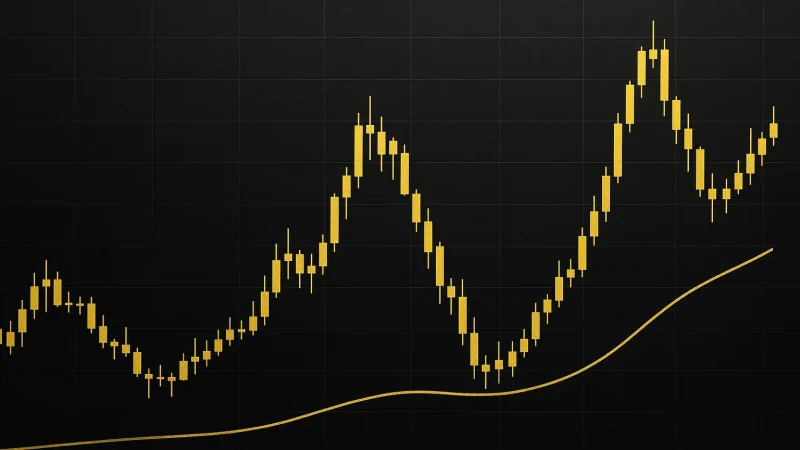
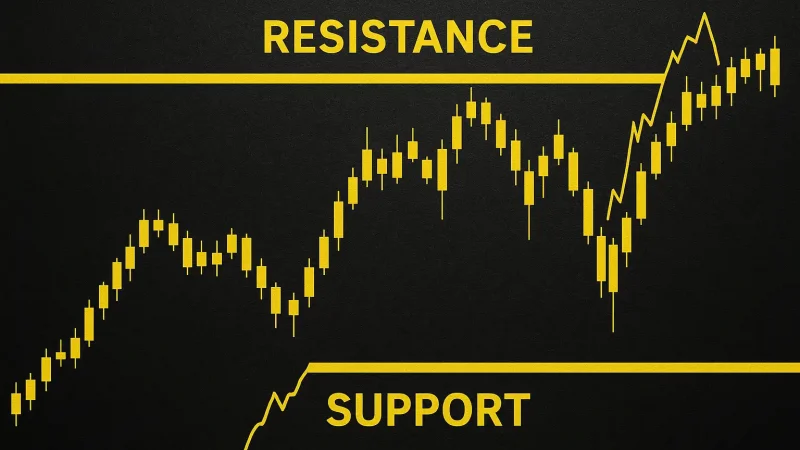
When you look at the technical indicators, you get a picture that’s mixed but leaning slightly bullish-to-neutral in the near term. As of mid-February 2026, about 68% of indicators are pointing bullish while 32% suggest caution. The key resistance zone sits around $0.04939–$0.050, with support hanging out between $0.03460–$0.040. The Relative Strength Index is hovering around 54.6—basically neutral territory, meaning PYTHIA isn’t particularly overbought or oversold right now.
Some short-term moving averages are flashing buy signals, though the 50-day and 200-day exponential and simple moving averages are still acting as hurdles. Volatility is running high, which is a double-edged sword—it means there’s room for significant upside moves, but also sharp corrections can happen without much warning.
Price Potential Over the Next Month
With the current price at $0.05047, a reasonable expectation for the next four weeks would see PYTHIA bouncing between support around $0.038–$0.041 and resistance near $0.055–$0.056, given typical market noise and the push-pull of buyers and sellers. If buyers manage to push through $0.055, we could see a test of $0.060. On the flip side, if support at $0.040 doesn’t hold, things could slide down toward the $0.030–$0.035 range. Overall, the technical picture suggests a neutral-to-bullish stance makes sense—especially if there’s positive news on the fundamental front.
Mid-to-Long Term Projections & Key Catalysts
Looking further out toward late 2026 and beyond, the forecasts start to spread out more. One model suggests annual average prices for 2026 could range anywhere from $0.03078 to $0.1250—that’s a potential upside of around 167% if conditions align favorably. For 2027, another projection puts the average around $0.1435, with a bearish scenario at $0.1210 and a bullish one at $0.1661. Some of the more optimistic projections even hint at multi-dollar valuations by 2030–2031, though those rely heavily on Orama Labs executing their roadmap flawlessly and the whole DeSci market expanding significantly.
There are several catalysts worth keeping an eye on: the official rollout and adoption of the Orama Labs LaunchPad, how many researchers and projects actually get funded through the platform, any regulatory news (especially around bio-crypto projects), token unlock schedules and inflation concerns, and the overall mood in crypto markets. Any of these could swing the price materially—either up if things go well, or sharply down if they don’t.
Scenario Analysis
Bull Case: The LaunchPad gains real traction; grant and airdrop programs create genuine demand; regulatory frameworks become clearer and more supportive. In this scenario, the price could climb toward $0.125 or even higher within 12 to 18 months.
Base Case: Growth is steady but not spectacular; the price settles into a range between $0.045 and $0.075; the market trades sideways with occasional spikes when news breaks.
Bear Case: Regulatory crackdowns or ethical controversies emerge, combined with broader market stress. This could push the price below $0.040, potentially testing the $0.030 support zone.
For anyone considering a position, it probably makes sense to stagger your entry points rather than going all-in at once. Pay attention to volume at key support and resistance levels—that’ll help confirm whether moves are real or just noise. And perhaps most importantly, stay on top of both the technical signals and the fundamental developments. This is one of those situations where both matter quite a bit.